Nofinity Logo

Latest Analyses(7)

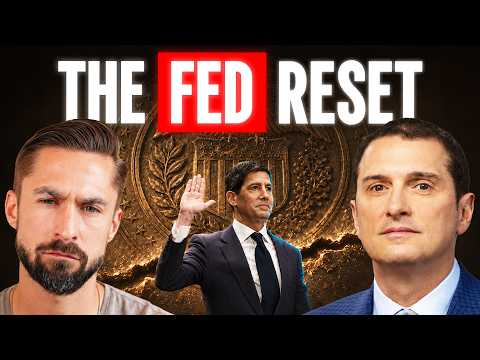
Why Higher Rates Could Actually Calm Markets
5 min read

Why Higher Rates Could Actually Calm Markets

đŸ›ïž The Federal Reserve's Transformation: From One-Man Show to Democratic Committee
  • Structural Shift: The Fed is evolving from a chairman-dominated entity into a committee with 12 independent voters, akin to the Supreme Court.
  • Background: Donald Trump's attacks on the Fed heightened concerns about the central bank's independence, leading to a record number of dissenting votes (10 dissents this year).
  • Examples: At the July 29th meeting, three members dissented, all favoring a rate hike. The probability of a hike was 35-40%, a far cry from the historical 2% or 98%.
  • Leadership Style: New Fed Chair Kevin Warsh supports this shift, calling internal debates a "healthy family fight." He is a primus inter pares, not a sole ruler.
📉 Forward Guidance & Reaction Function: A New Communication Style
  • Rejection of Forward Guidance: Kevin Warsh opposes "forward guidance" (predicting future rate moves). He argues the market treats it as a promise, leading to policy errors like the "transitory inflation" narrative of 2021 or the "Taper Tantrum" of 2013.
  • Lack of Reaction Function: Warsh is not providing a clear "reaction function" (rules of the road). He is waiting for task force results to define which data will guide future decisions.
  • Consequence: The market must learn to navigate more ambiguous signals and focus on raw data instead of the Fed's interpretation.
📈 Why Higher Rates Could Actually Calm Markets
  • The Bond Market Paradox: Despite the Fed cutting rates by 175 basis points since September 2024, long-term yields (10-year and 30-year) have risen. The 30-year yield recently hit a 19-year high.
  • The Logic: Bond investors fear inflation eroding their fixed coupons. If the Fed doesn't fight inflation, they sell bonds, pushing yields up. Once the Fed shows concern (e.g., by raising rates), the bond market calms down.
  • The Thesis: "When the Fed starts worrying, bond traders stop worrying." A credible fight against inflation through higher rates could lower long-term yields.
  • Moral Hazard: Withholding forward guidance aims to prevent excessive risk-taking and leverage, which caused the Silicon Valley Bank collapse.
🏠 Impact on Housing and the Economy
  • Economic Strength: The U.S. economy is strong enough to handle higher rates. The stock market is at an all-time high.
  • AI as a Driver: Massive AI investments (larger than the U.S. defense budget) are a key economic engine. Jim Biano calls AI the biggest technology since the railroad.
  • Housing Market: Despite high mortgage rates, home prices are at record highs. Higher rates could stall prices, which would be beneficial for 140 million renters seeking to buy a home.
đŸ€– The AI Bubble: Bull and Bear Scenarios
  • Current Phase: According to Jim Biano, we are in the "1997/98" stage of the AI cycle. Massive capex is justified by the technology's transformative potential.
  • Outlook: A bubble is likely when enthusiasm becomes unbounded. The crash may be 2-3 years away and could be severe.
  • Optimistic Case: Real productivity gains from AI will eventually support the economy, leading to a soft landing after the bubble bursts.
₿ Crypto: Back to Basics
  • The "Debasement Trade": Gold and Bitcoin have not recently acted as clear safe havens. The strength of the U.S. dollar in times of crisis dampens this trade.
  • Bitcoin's Problem: Bitcoin lacks a full ecosystem (like DeFi on Ethereum) and is too reliant on institutional adoption (IBIT ETF).
  • "Strong vs. Weak Crypto": Jim Biano advocates for "strong crypto" (decentralized, permissionless, serving people in unstable countries) and warns against begging for permission in Washington (Clarity Act).
  • Call to Action: Crypto's true opportunity lies in building an alternative financial system for the 1+ billion people in nations with unstable currencies, not just serving as another asset class for the wealthy.

This is a summary of the conversation with Jim Biano, presenting his analysis of the Fed's structural changes, market dynamics, and the role of crypto.
Coinbase Just Became a BANK (Here's What It Means For You)
2 min read

Coinbase Just Became a BANK (Here's What It Means For You)

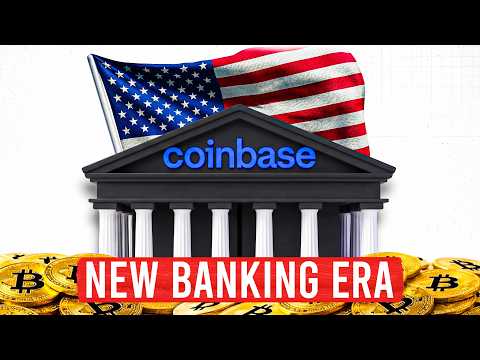
Coinbase Gets a National Trust License – But Not a Traditional Bank

Coinbase now holds a National Trust Bank charter from the OCC, the federal bank regulator. However, it is not a full-service bank:

  • No accepting deposits, no lending
  • No FDIC insurance
  • Focus: custody of digital assets for institutions (e.g., BlackRock's IBIT ETF)
  • Staking, trading, and financing remain in separate Coinbase entities
Why Bank Lobby Is Suing

The Independent Community Bankers of America (ICBA) sued the OCC, calling the license a "backdoor for crypto into the banking system." The case is pending.

What the License Enables
  • Coinbase can now act as trustee for retirement accounts (IRA/401k) – a massive market
  • Institutional custody will shift from its New York charter to the federal charter within three years, boosting trust among pension funds
  • Similar licenses have been granted to Circle, Ripple, Anchorage, BitGo, and soon Paxos & Fidelity
Remaining Limitations
  • No Federal Reserve account, hence no direct access to Fed payment systems
  • Customer fiat still held at other banks
  • No deposit insurance for crypto assets held in custody
Bottom Line

Coinbase is not becoming a conventional bank, but it has secured a regulated foothold in the U.S. banking system – a remarkable turnaround after years of legal battles with the SEC and other agencies.

December 2026: Don't Miss These Deadlines!
4 min read

December 2026: Don't Miss These Deadlines!

⏰ December 2026: Don't Miss These Deadlines and Saving Opportunities!

December is a crucial month to save money and complete important to-dos. Here are the key points:

  • Retirement Planning: Riester vs. New Retirement Savings Account
    • December 2026 is the last month to open a new Riester contract. From January 2027, it will be replaced by the "Altersvorsorgedepot" (AVD).
    • The AVD is more attractive for most:
      • Higher state subsidies (e.g., up to €540 basic allowance per year instead of €175 for Riester).
      • No guarantee requirement – you can invest in ETFs for better returns.
      • Lower costs due to provider competition.
      • Exception: Families with low income and children (born after 2008) may benefit from a Riester contract, as small contributions (€60/month) activate the full subsidy (up to €775 with two children).
    • Existing Riester contracts remain valid. Three options:
      1. Continue with old terms.
      2. Keep the contract but switch to new subsidies.
      3. Transfer capital to the AVD.
    • Tip: Don't be rushed. Wait until after New Year's, compare providers, and then switch. Sign up for the AVD start list (link in video description) for a free video course.
  • đŸ’¶ Save on Taxes
    • Optimize your tax exemption order: Up to €1,000 in capital gains per year are tax-free. Check if your orders across different accounts are allocated correctly. Make changes before New Year's Eve, but not too late – many banks have a December deadline. If changed, your broker will automatically refund overpaid taxes.
    • Apply for a loss certificate: By December 15, you can request a loss certificate from your broker to offset losses in one account against gains in another. This is worthwhile if gains exceed the tax exemption.
    • 2022 tax return: You can still file your 2022 tax return voluntarily by end of December. On average, people received €1,240 back. Don't forget the home office allowance (up to €600) and the increased commuter allowance.
  • đŸŠ· Dentist: Bonus booklet and dental prosthetics
    • From January 2027, health insurance subsidies for dental prosthetics will decrease (from 60% to 50% without a bonus booklet).
    • Secure the old subsidies:
      • Go for a dental check-up this year to avoid a gap in your bonus booklet.
      • Have a cost plan for dental prosthetics approved by your insurance in 2026 – then the old rate applies even if treatment is in 2027.
  • 🏠 Utility bill
    • Your 2025 utility bill must be received by end of December. If it arrives later, your landlord cannot demand additional payments (unless not their fault). Refunds must still be paid.
    • Heating meters must be readable remotely by year-end. If not, you can reduce your heating cost share by 3%.
  • 🚆 Deutsche Bahn: New timetable
    • From December 13, new connections, e.g., ICE Sprinter Hamburg–Munich (5h 20min) and Berlin–Paris (under 8h).
    • Punctuality: Only 52.4% of long-distance trains were on time. Prices are supposed to remain stable, but super saver fares were more expensive (median +36%).
  • 🇩đŸ‡č Austria: Digital vignette
    • From December, only digital vignettes are available (stick-on vignettes valid until end of January 2027).
    • Buy in December: The annual vignette costs €106.80 (from 2027: €108.90). Purchase possible without internet (provide license plate at gas stations).
Ethereum Made $6 Million in 30 Days. Does That Justify ETH's Price?
2 min read

Ethereum Made $6 Million in 30 Days. Does That Justify ETH's Price?

Analysis of Fundamental Value: Ethereum vs. Solana

This transcript questions whether current market capitalizations are justified by revenue and wallet usage.

Ethereum

  • 30-day revenue: Only $6 million (a bad month; extrapolated to $10M monthly).
  • Annualized revenue: $120M – with a 20x multiplier, value is only $2.4B.
  • Layer-2 hedging: Mentioned as a potential add-on, but still negligible.
  • Wallet analysis:
    • 200M wallets, average 0.1 ETH = 20M ETH held for gas fees.
    • At $2,000/ETH, utility value is $40B.
  • Market cap: $200B – only $40B is quantifiable, leaving $160B of speculation.

Solana

  • 30-day revenue: $1.7 million (rounded up to $5M monthly).
  • Annualized revenue: $60M – with multiplier, at most $5–10B value.
  • Wallet analysis:
    • 100M wallets, average 0.02 SOL = 2M SOL for active use.
    • At $100/SOL, utility value is just $200M.
  • Market cap: $50B – enormous gap.

Conclusion

Both Ethereum and Solana derive most of their value from social sentiment or hope, not from current revenue or active usage. The fundamental metrics fail to justify current prices.

Bitcoin: The Capitulation Spiral
2 min read

Bitcoin: The Capitulation Spiral

The Capitulation Spiral

The host delivers a thorough, cycle-based analysis arguing Bitcoin is deep into its final "Capitulation Spiral" of the midterm year. He directly compares the current downtrend to the market structures of 2015, 2020, and 2022, emphasizing the lack of a sustained breakout above the 200-Week Moving Average.

Key Data Points
  • Price: Dropped below $66k, breaking key support levels.
  • Year-to-Date Performance: Bitcoin underperformed drastically against the S&P 500 (-32%), Gold (-16.5%), and Energy (-48%).
  • Whale Activity: The Whale Activity Dashboard shows no significant accumulation around previous lows (Feb/Summer), suggesting the truly smart money is waiting for the Q4 bottom.
  • On-Chain Risk: Has dropped below 0.2; historical bottoms usually occur below 0.1.
The Cyclical Blueprint
  • Midterm Pattern: Strict adherence to the four-year cycle. Top in Q1, lows in Feb/Summer, and the final Q4 capitulation post-midterms.
  • Fake Outs: Rallies to previous highs lack the “extension” (20-40% surge) seen in true bull markets, making them dead cat bounces.
  • Rate Hike Alignment: The current movement perfectly mirrors the average path after the first rate hike of a hiking cycle (e.g., March 2022). The final low is statistically due around Day 94 (~35 days from recording).
Market Sentiment & Outlook
  • Social Interest: At an all-time low, indicating retail investor capitulation is in full swing.
  • Prediction: One or two more bounces/drops could occur before the bottom is found. The host is cautious about calling a bottom prematurely.
  • Call to Action: Avoid echo chambers. The upcoming conference in Miami aims for respectful, evidence-based discussion.
Which Crypto Use Cases Are Actually Growing? Jeff Dorman Says Bitcoin Isn't One
2 min read

Which Crypto Use Cases Are Actually Growing? Jeff Dorman Says Bitcoin Isn't One

In this clip from the podcast Unchained, Jeff Dorman explains which crypto use cases are actually gaining traction. After 15 years of mostly failed experiments, only three areas show undeniable growth:

The Three Growth Drivers
  • Stablecoins & Payments – Undeniably rising. Wall Street and major banks are involved, transaction volumes keep increasing.
  • Tokenization of Real-World Assets (RWA) – Bonds, stocks, real estate, and commodities (roughly $700 trillion) are moving onto the blockchain. Trading volumes are surging.
  • DeFi (Decentralized Finance) – The glue that connects stablecoins and tokenized assets. DeFi now accounts for 25% of all crypto transaction volume (previously <1%).
What About Bitcoin?

Bitcoin is deliberately not mentioned, as it is not part of this trend. It remains a unique asset, unrelated to the current blockchain growth story.

How to Invest?

For exposure to all three areas, Ethereum offers the broadest access.


Note: This clip is from Laura Shin's podcast „Unchained“. The full conversation is linked in the description.

I Built an INSANE Fable 5.2 Trading Bot That Made $89,117 (Full Guide)
2 min read

I Built an INSANE Fable 5.2 Trading Bot That Made $89,117 (Full Guide)

Summary: Building an AI-Powered Trading Bot with Claude Fable 5.2

This video demonstrates how to build a functional trading bot using the new Claude Fable 5.2 model and test its profitability on Bitcoin.

Test Setup

  • Comparison: Fable 5.2 vs Claude Opus 5.5 – each creates 100 strategies.
  • Data: Bitcoin (BTC/USDT) on 4-hour candles from April 2020 to October 2024 (training) + a hidden year for testing.
  • Parameters: Fees and slippage included for realistic results.

Strategy Results

  • Fable’s best strategy (S100): 791% profit ($10,000 → ~$89,000), risk: sideways market.
  • Opus’ best strategy (S84): 331% profit, same risk.
  • Hidden year: Bitcoin dropped 29.44% – nearly all AI strategies outperformed.

Key Metrics for Backtesting

  • Maximum Drawdown: Crucial for risk assessment – Fable optimized to 49.28% vs Bitcoin's 77%.
  • Sharpe Ratio: Fable's best reached 1.44 – return per unit of risk.

Next Steps for Live Trading

  1. Pine Script on TradingView for testing.
  2. Set up Webhook: e.g., via Bybit (demo or live account).
  3. Launch strategy: Start with small capital, then scale up.

Tip: Avoid overfitting – use hidden data (out-of-sample tests) and focus on robust, risk-adjusted strategies.