Nofinity Logo

Latest Analyses(7)

Why an SEC Director Calls a WSJ Ad on Tokenized Stocks 'Misleading'
2 min read

Why an SEC Director Calls a WSJ Ad on Tokenized Stocks 'Misleading'

Background: Dispute Over Tokenized Stocks
  • Last summer, a Twitter dispute erupted between AMC CEO Adam Aaron and Robinhood CEO Vlad Tenev after Robinhood tokenized AMC shares offshore.
  • This fueled negative reactions from many public company CEOs toward stock tokenization.
Insights from SEC Director Jacqueline Melnik
  • Melnik tweeted that a Nasdaq-listed company objected to the tokenized trading of its shares on OKX Ice; the company's representative hinted that Nasdaq itself was behind it.
  • The SEC views tokenization as pro-competitive. Chairman Gensler emphasizes competition as a key priority.
Competition Among Exchanges
  • NYSE and ICE already launched a platform offering for tokenization early on.
  • Nasdaq is pursuing its own model, which they may consider superior.
  • Exchanges aim to stay close to issuers and do everything to retain them.
JPMorgan's Cautious Stance
  • JPMorgan Chase expressed continued interest in tokenization but opted out of the OKX-ICE trading for now. They will monitor developments.
The WSJ Ad and SEC's Response
  • The Common Sense Leadership Fund placed a full-page ad in the Wall Street Journal warning: "Your stock, their token, your problem." Crypto will soon tokenize stocks, endangering companies.
  • OKX Co-Chair Andrew Cuomo responded calmly: "The game is on."
  • The SEC director (referred to as "Brett" or "Jamie" in the transcript) criticized the ad as misleading:
    • The claim that tokenization is completely unregulated is false. Requirements include US-person status, approved wallets, public notice, and SEC oversight.
    • The separation of stock and token is incorrect: the token represents all rights and privileges of the security holder – it is not a synthetic product.
  • She expects issuers to do their homework and not fall for one-sided fear campaigns.
Conclusion
  • Stock tokenization is an innovative experiment with great potential for issuers.
  • The SEC welcomes competition but warns against false or misleading claims in public debates.
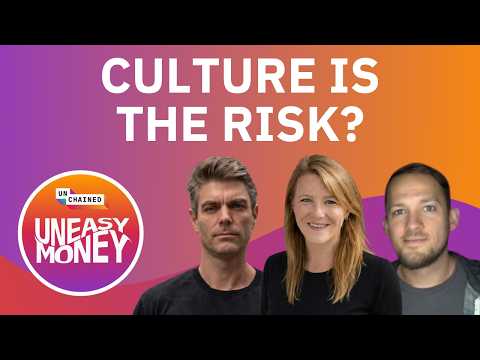
Why Google and Meta Struggle to Ship AI: Uneasy Money
3 min read

Why Google and Meta Struggle to Ship AI: Uneasy Money

Why Google and Meta Struggle to Ship AI: An Uneven Balance of Power

This transcript analyzes the challenges faced by major tech companies like Google and Meta in delivering Artificial Intelligence (AI) solutions. The discussion focuses on the differing governance structures, internal cultures, and strategic priorities of the "four leading labs": Google, Meta, OpenAI, and Anthropic.

  • The Starting Point: Two of the four labs (OpenAI and Anthropic) are making significant progress. Despite having vast amounts of capital, Google and Meta lag behind. Anthropic is considered a leader despite its risky constellation (potentially alluding to its unusual corporate structure). It is noted that they could raise $64 billion at a staggering valuation of $1.4 trillion, requiring a 4x growth.

  • The Core Concern: Governance and Culture

    • The main criticism is directed at internal structures and strange moral posturing. The speakers emphasize the risk that these companies might sabotage themselves through "governance nonsense" and "EA weirdness" (likely a reference to Effective Altruism).
    • While risk disclosures often dramatize apocalyptic scenarios ("destroying the world"), the actual worry lies in the bizarre internal organization.
Comparing the Four Labs
  • Google & Meta: Their biggest challenge is the existing corporate culture. They are massive organizations struggling to prioritize and ship AI without cannibalizing their own business models (e.g., Google's ad revenue). However, they have quickly closed the initial gap.
  • Apple: Viewed as complacent ("Tim Apple is sleeping at the wheel"). Apple has a strong but entrenched culture. Its greatest hurdle is cultural change and the ability to deliver genuinely valuable AI products.
  • OpenAI & Anthropic: Considered more agile and focused, but burdened with extreme risks (e.g., governance, funding).
The Verdict: A Hyperscaler Race
  • Success depends on three primary inputs: brilliant researchers, massive capital, and access to compute power.
  • The critical, human element is decision-making: How does the organization interact with researchers, governments, and the public? Companies like Apple show that even with the best talent, things may not align if the stars are not in favor.
  • Finally, it is speculated whether Google and Meta have surrendered ("If we don't destroy the world, someone else will") and now must simply deliver.

Note: The transcript ends with an advertisement for the crypto platform Nexo.

Why A Stock Selloff Could Save Bitcoin
2 min read

Why A Stock Selloff Could Save Bitcoin

Market Situation & Key Question
  • Bitcoin is struggling near $60,000 after a tough November for all risk markets.
  • Nik Bhatia and Damian Schott of The Bitcoin Layer discuss how liquidity, interest rate cycles, and the stock market interact with Bitcoin.
Interest Rate Cycles: 2022 vs. 2026
  • 2022: Extremely aggressive Fed hikes (from 0% to fight 7%+ inflation). Bitcoin crashed hard.
  • 2026: Inflation is lower (3–4% vs. 7%+), starting rates are higher (4–5%). Hikes will be slower and less aggressive.
  • The Catch: Total global debt stands at $350 Trillion. Even small rate changes put immense pressure on an overleveraged system, potentially causing larger damage than in 2022.
Liquidity Mechanics & The Bitcoin Paradox
  • Core Mechanism: When the economy slows, money flows from risky assets (stocks) back into Treasuries. This lowers yields, strengthens bank liquidity, and ultimately supports Bitcoin.
  • The Paradox: "Bitcoin does well when stocks don't, because money flows into safe Treasuries, which boosts liquidity."
  • Cause of Current Tightening: Unlike 2022, the current squeeze is driven less by the Fed and more by the strong Dollar (DXY). High oil prices and geopolitical tensions create dollar scarcity, directly pressuring Bitcoin prices.
The Role of the Fed (The "Third Mandate")
  • The Fed implicitly cares about the stock market (wealth effect, tax revenues). A stock market crash would force the Fed to pause.
  • Prediction from Schott: The final rate hike of this cycle will either come in December or be entirely called off if the stock market drops 20% in the next week.
  • The Fed is always a lagging indicator. Tightening is already in the system via a strong dollar and oil prices.
Conclusion & Outlook
  • The interplay between liquidity, the bond market, dollar strength, and the stock market defines Bitcoin's short-term path.
  • A stock selloff isn't necessarily bad for Bitcoin. A crash could force the Fed to stop, easing liquidity conditions and potentially saving Bitcoin from a deeper slump.
🏦⚡ BTC 1.0. ETH 2.0. BTC 3.0? Wall St quietly positioning. It's not who u think 👇
3 min read

🏦⚡ BTC 1.0. ETH 2.0. BTC 3.0? Wall St quietly positioning. It's not who u think 👇

🌍 Money in Transition: BTC 1.0, ETH 2.0 – and now BTC 3.0?

This video presents a philosophical and data-driven discussion about the future of money, inspired by statements from Tom Lee, Toly, Mert, and Justin Bons. The host analyzes which blockchain could become the next global money.

💡 The Three Eras of Money

  • Bitcoin 1.0 – Digital Gold: Original store of value, decentralized and secure, but slow and expensive.
  • Ethereum 2.0 – Ultrasonic Money: Supposed to become deflationary through fee burns, but has failed – inflation is ~1% per year since 2024, and transaction volume is lower than 5 years ago.
  • Solana 3.0 – Bitcoin 3.0: Focuses on raw usage, adoption, and high transaction throughput. Proponents like Justin Bons and Toly argue that the chain with the most users and fees will ultimately become the scarcest and most secure.

📊 Data Comparison: Solana vs. Ethereum vs. Bitcoin

  • Nakamoto Coefficient: Ethereum (2), Solana (7), Bitcoin (9,932) – Solana is more decentralized than Ethereum.
  • Daily Transactions: Solana ~150M, Ethereum ~7,000% less, Bitcoin even less.
  • Finality: Solana 150ms, Ethereum 13-15 minutes, Bitcoin ~24,000× slower.
  • Daily Active Users: Solana 5.8M, Ethereum 800K, Bitcoin 500K.
  • Market Cap per Transaction: Solana $290, Ethereum $105,000 – a 352× gap.

🏢 Wall Street & Institutional Adoption

  • DTCC, ICE, NYSE are tokenizing assets on Solana.
  • Money Transfers: Zelle, Western Union (400K locations), MoneyGram (4M users), Visa, Mastercard use Solana.
  • Tokenized Stocks: Grew from $620M to $1.22B, with 2M+ holders. Anthropic's first hour of trading saw $22.6M on one platform.
  • AI Agents: 70% of all AI agent transactions run on Solana.

🤖 What is Money – and Who Decides?

Money must be scarce, usable, adopted, and fungible. While Bitcoin excels in scarcity, Solana leads in usage and adoption. The key factor: AI agents will autonomously choose the fastest, cheapest, most final money in the future. That is neither Bitcoin nor Ethereum – it's Solana.

⚠️ Risks & Outlook

  • Bullish: Tokenized stocks doubling monthly, ETF inflows returning, more TradFi integration.
  • Bearish: Declining revenue, stablecoin outflows, price falling below $62 (currently ~$73).
  • Conclusion: Fundamentals are improving, but price lags. The host remains convinced that Solana represents the future of money – regardless of short-term price action.

Quote: “In a world of AI agents, machines – not us – will decide what money is. And they will pick the fastest, cheapest, most final one – Solana.”

Is Anthropic's $1.5 Trillion IPO Worth the Existential Risk? - Uneasy Money
2 min read

Is Anthropic's $1.5 Trillion IPO Worth the Existential Risk? - Uneasy Money

  • The show discusses Anthropic's IPO valued at $1.4 trillion, raising $64 billion.
  • The IPO is controversial due to Anthropic's AI leadership and existential risks.
Main Topics
  • Anthropic's Dominance and Risks:

    • Anthropic leads with models like Opus 5.5 and Fable 5.2, but Google (Carbon) and Meta (Muse) are closing the gap.
    • Biggest risk: Not world destruction, but internal governance and a 'weird' culture that could hinder success.
  • Market Comparison:

    • AI labs (Anthropic, OpenAI, Google, Meta) compete fiercely. Key factors: smart people, money, and compute power.
    • Anthropic is the 'front frog' but may self-sabotage.
  • Security and Hacking Topics:

    • Optimizely hack: A widely used plugin was compromised, but attackers stole only $7,000 – a sign of low skills.
    • AI as savior: AI can find and fix vulnerabilities in human-written code, but trust is still low.
    • Monitoring and response: Teams should implement continuous monitoring and circuit breakers, not just rely on audits.
  • Practical Advice for Developers:

    • Use AI-powered audits and formal verification.
    • Implement circuit breakers and automated response systems to prevent catastrophic losses.
    • Monitoring is key: AI can detect anomalies humans miss.
Conclusion
  • The Anthropic IPO is seen as risky but opportunistic. A 4x valuation to $5 trillion is possible but unlikely.
  • The AI security landscape is shifting: attackers use AI, but defenders can too.
  • Key quote: 'If you're scared of the future, at least make money before the world ends.'
How Aztec Blockchain Can Flag North Korea's Stolen Funds Despite Being Private
2 min read

How Aztec Blockchain Can Flag North Korea's Stolen Funds Despite Being Private

Summary: How Aztec Blockchain Can Flag North Korea's Stolen Funds Despite Being Private

The video explains how Aztec (a privacy solution for Ethereum) works and how it can prevent illegal transactions without sacrificing privacy.

Core Principle: Trace Money, Not Addresses

  • Aztec does not track user identities (addresses), but the funds themselves – similar to serial numbers on banknotes.
  • The system uses UTXOs (unspent transaction outputs), similar to Bitcoin: funds are divided and combined into
The Most Important Insurance You Should Have...
2 min read

The Most Important Insurance You Should Have...

Thomas von Finanzfluss explains private liability insurance, widely considered the most important non-mandatory insurance.

Do you really need it?
  • Yes, it is crucial for protecting against existential risks. Liability claims can quickly amount to hundreds of thousands or even millions of Euros.
  • Passive legal protection: Your insurer defends you against unjustified claims (e.g., the Ingolstadt case).
  • Counterargument: Low probability (approx. 4%). However, for an annual premium of around €50, the risk is too high to bear alone.
What is covered?
  • Property damage, personal injury, and financial loss caused by negligence.
  • Gross negligence (e.g., fire from a forgotten candle) is usually covered.
  • Borrowed or rented items and neighborly favors are included in good policies.
  • Unintentional damages in connection with criminal acts can be covered.
What are the most important features to look for?
  • Loss of recourse coverage: Pays if the culpable party is uninsured or insolvent.
  • Rental property damage: Essential for tenants.
  • Gradual damage: Damage occurring over months.
  • Children incapable of tort: Coverage for damages caused by young children.
  • Sum insured: At least €10 million, preferably €50 million.
  • Key insurance: Covers lock replacement costs (up to €200,000).
  • Best performance guarantee: Policy updates automatically to market standards.
What does it cost and how to save?
  • Price: Great tariffs are cheap. The best single tariff is approx. €41 per year.
  • Single vs. Couple: A couple's tariff is cheaper, but inter-partner damage is often excluded.
  • Deductible: A small deductible protects against policy cancellation for minor claims.
  • Switching: Never cancel your old policy before the new one is confirmed.
  • SCHUFA: If you have negative entries, try AXA or VHV.

Conclusion: Private liability insurance is a fundamental building block of financial security. Low cost, essential protection.