Nofinity Logo

Latest Analyses(7)

Google Stock Intrinsic Value
2 min read

Google Stock Intrinsic Value

Assessment and True Valuation of Google
  • Stock Performance: Google stock has surged (from $100 to nearly $400) driven by AI optimism, while fears about ChatGPT have not materialized.
  • Adjusted Earnings: Reported earnings include one-time gains ($55B from Antropic investment). True net earnings stand at $105B, giving a real P/E of 40 (vs. reported 26).
  • Risk Factors: Free cash flow is declining (only $10B last quarter) while capital expenditures are rising sharply. Return on these investments needs scrutiny.
  • Intrinsic Value: Assuming 12% annual growth and a P/E of 20, fair value is about half the current price. Even optimistic assumptions (15% growth, P/E 25) only match the current stock price. A conservative case (8% growth, P/E 15) would justify only 30% of today's price.
  • Conclusion: The stock is “priced for perfection” – not a good buying opportunity now. In comparison, Microsoft trades at a P/E of 23 and appears cheaper.
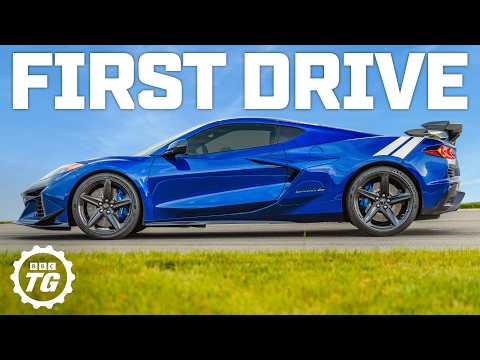
New Corvette Grand Sport: Don’t Buy A Porsche 911 GT3! | 4K
3 min read

New Corvette Grand Sport: Don’t Buy A Porsche 911 GT3! | 4K

New Corvette Grand Sport: The Best Sports Car Bargain?

Dive into the world of the new Corvette Grand Sport (C8), a car not officially sold in Europe, yet potentially one of the best value propositions in the automotive world, according to Top Gear.

Background & Positioning

  • The Grand Sport is the middle variant of the C8 generation: more power than the base Stingray, but less extreme than the Z06 or ZR1.
  • Starting price: approx. $86,000. The fully loaded test car costs $131,000 – still less than a base Porsche 911 in the US.

Engine & Performance

  • New 6.7-liter naturally aspirated V8 (LS6) producing 535 hp – no turbochargers, pure character.
  • Performance on par with a Porsche 911 GT3, but for significantly less money.
  • Standard electronic limited-slip rear differential and revised suspension.
  • Optional Z52 packages with semi-slick tires (Cup 2R) and carbon-ceramic brakes.

Driving Feel & Handling

  • Surprisingly agile and responsive for a car weighing approx. 1.7 tons.
  • Tremendous grip (especially with the optional slick tires).
  • The gearbox works well with the engine.
  • Despite its sportiness, it remains comfortable and livable on the highway.
  • Only criticism: The drive mode selector is somewhat complicated and less intuitive than in a Porsche or Ferrari.

Design & Interior

  • Exterior: The striking blue color (Admiral Blue) with white stripes is a homage to the 1995 original. The quad-exit central exhaust (option, $2,000) looks spectacular.
  • Removable roof (Targa top) can be easily stowed in the large trunk (behind the engine). No compromise on rigidity.
  • Interior: Significantly improved – the annoying 'wall of buttons' has been replaced with standard switches. The sport seats (option, $1,995) are comfortable and supportive.
  • Character is key: The car feels honest and passionate.

Conclusion & Key Takeaways

  • The Corvette Grand Sport is the complete package: exciting, fast, livable, and affordable.
  • Best-sounding production supercar – the V8 sounds incredible.
  • For the price of a base 911, you get a near-GT3 competitor.
  • Available without a VIP list – a high-quality, 'no-nonsense' sports car.

Core Message: The Grand Sport is the best surprise of the year – an American muscle car that makes European supercars look overpriced.

Anthropic-IPO: I'm Subscribing! // The Big Analysis of the Claude Stock
2 min read

Anthropic-IPO: I'm Subscribing! // The Big Analysis of the Claude Stock

The Biggest AI IPO of All Time

Anthropic, the creator of Claude, is going public on November 19th, with a valuation of $1.4 Trillion. Mario Lochen and Sinan Krieger break down the massive opportunities and risks.

The Brutal Growth Story
  • Revenue: $17 Billion in Q3 (12x YoY growth).
  • Customer Stickiness: $1M clients now spend an average of $9M – a net revenue retention of 900%.
  • Profit Warning: A net loss of $104 Billion, mostly a book loss from convertible bonds.
Significant Risks
  • Infrastructure: Commitments totaling $900 Billion for data centers.
  • Politics: Conflicts with the Pentagon and increasing regulatory scrutiny.
  • Stock Price: The IPO price can rise from $70-$78 to as high as $120.
Why This Investment? (Sinan Krieger's Perspective)

Sinan (Beating Beta), a strict ETF investor, is making an exception. The reason: Claude as a truly disruptive technology. In his company, Claude cut the layout process for reports from one week down to 12 minutes.

Historical Insight: Disruptive tech (Auto, Internet) always wins eventually, but 90% crashes (like Amazon/Nvidia) are a real possibility.

The Three Stock Price Scenarios (2030)

Analysis based on an issue price of ~$74:

  • 🟢 Base Case: $108
  • 🟢 Bull Case: $247
  • 🔴 Bear Case: $19 (a 74% loss)
Conclusion

There is immense potential from productivity leaps, but a strong warning against hype and FOMO. A strategic, long-term entry is recommended, but investors must be prepared for the very real risk of losing their entire investment.

How This Hormone Burns Visceral Fat & Protects Muscle
3 min read

How This Hormone Burns Visceral Fat & Protects Muscle

This transcript summarizes an interview with Dr. Cristal Hill about the effects of protein restriction and the hormone FGF-21 on metabolic health, fat burning, and longevity.

🌿 Protein Restriction vs. Calorie Restriction
  • Calorie restriction is an extension of protein restriction, not the other way around.
  • Protein restriction does not reduce total calories, only the macronutrient ratio.
  • The mechanisms differ: Calorie restriction activates AMPK and sirtuins, while protein restriction induces FGF-21 via the liver.
🔬 FGF-21: The Key Hormone
  • FGF-21 (Fibroblast Growth Factor 21) is mainly produced in the liver and released as a stress hormone when the body detects a lack of amino acids.
  • Other triggers: Ketogenic diet, fructose, alcohol, and exercise.
  • FGF-21 promotes autophagy, glucose homeostasis, energy expenditure, and fat burning.
  • It acts primarily through the brain (hypothalamus), which then sends peripheral signals to fat tissue, liver, and muscles.
🧬 Effects on Adipose Tissue
  • Subcutaneous fat: Undergoes browning into beige fat, increasing thermogenesis and energy expenditure.
  • Visceral fat: Enhances immune regulation and reduces inflammation.
  • Brown fat: Maintains its size and shows increased expression of cardio-neuroendocrine genes.
  • Senescence markers (cellular aging) are particularly reduced in visceral fat.
🏋️ Protein Restriction and Muscle Preservation
  • Risk for the elderly: Protein restriction can lead to sarcopenia (muscle wasting) in people over 65.
  • Solution: Combining with resistance training preserves muscle function, as the liver synthesizes its own amino acids.
  • Study: In 55- to 70-year-olds, protein restriction plus weight lifting was as effective as weight lifting alone.
🧪 Practical Implementation & Precautions
  • Recommended protein amount for protein restriction: One quarter of the RDA (0.8 g/kg body weight), approximately 0.2 g/kg.
  • Target group: Protein restriction is not suitable for pregnant women, the elderly (65+), or those at increased risk of falling.
  • Biomarkers: Success can be measured through increased energy expenditure, preserved muscle mass, improved insulin sensitivity, and favorable blood lipid profiles (HDL↑, LDL↓).
  • Genetic variants: There are seven FGF-21 variants; not everyone responds equally to protein restriction.
  • Sex differences: Young women with intact estrogen levels show fewer effects; after menopause, responses align with those of men.
🧠 Key Takeaways
  • FGF-21 is a central stress hormone that aims to return the body to homeostatic balance.
  • Protein restriction is not a one-size-fits-all solution – age, sex, activity level, and genetics play crucial roles.
  • Safety and tolerability, especially in older adults, must always be considered in the context of their nutrient absorption and gut health.
📚 Source Note

The described effects are based predominantly on animal studies (mice) and initial clinical trials with healthy young men. The translatability to humans requires further research.

How Wall Street Is Choosing Crypto's WINNERS
3 min read

How Wall Street Is Choosing Crypto's WINNERS

Wall Street Chooses Its Blockchains: Two Deals by ICE

The Intercontinental Exchange (ICE), owner of the New York Stock Exchange (NYSE), has selected two different blockchains this fall, demonstrating how traditional financial institutions selectively adopt crypto infrastructure.

1. NYSE Trading Platform on Avalanche
  • What's happening?: The NYSE plans a new trading platform for tokenized stocks, enabling 24/7 trading and instant settlement.
  • Technology: The matching engine (Pillar) remains with the NYSE. Clearing & settlement will be shifted to a private blockchain built on Avalanche.
  • No role for AVAX: The Avalanche token is not used for settlement or staking. ICE is utilizing only the technology, not the public network.
  • Partners: BNY and Citi are working on tokenized deposits for moving money outside banking hours.
  • Status: Not yet live; pending regulatory approval (target: Q4 2025).
2. Hyperliquid and trade.xyz: Perpetual Futures Outside Exchange Hours
  • Background: Hyperliquid is a blockchain for perpetual futures. The HIP 3 upgrade allows external developers (e.g., trade.xyz) to operate their own markets.
  • Weekend trading: When the US and Israel bombed Iran (Saturday), the CME was closed – Hyperliquid was not. The volume of crude oil futures on trade.xyz surged.
  • Cumulative volume: trade.xyz has processed over $650 billion in slightly over a year.
  • ICE's control: ICE initially warned the CFTC about Hyperliquid, then invested. Now ICE operates a regulated US trading venue on Hyperliquid (with KYC/AML), while Hyperliquid provides the technology and trade.xyz designs the markets.
  • Stanley Druckenmiller's involvement: The legendary trader posted on X that he is invested in trade.xyz – his first post ever. His family office also holds shares in Hyperliquid Strategies (ticker PURR).
3. The Difference: Token Utility
  • Avalanche deal: AVAX is not mentioned. ICE retains control over the blockchain, excluding the token.
  • Hyperliquid deal: Each trading fee on trade.xyz partially flows into the 'Assistance Fund', which buys and burns HYPE. Thus, the token is directly tied to revenue.
4. Competition: Other Chains and Companies
  • Kraken (Payward) plans a CFTC-regulated trading venue on Hyperliquid with access restrictions (whitelist).
  • Nasdaq invested $100 million in Payward for tokenized stocks – the blockchain remains undisclosed.
  • Solana: Formation Securities plans a trading platform for tokenized stocks on Solana with access controls.
Conclusion

Wall Street is not choosing a single blockchain but multiple – depending on the use case. Avalanche is chosen for stock settlement, Hyperliquid for perpetual futures. The key question is which chain will prevail as traditional financial institutions adopt this infrastructure.

3 Stocks I Own - Research Platform Overview!
3 min read

3 Stocks I Own - Research Platform Overview!

Platform Overview

The creator, a seasoned value investor with almost 25 years of experience, a former accounting & finance professor, and author of the Value Investing Handbook, presents his Research Platform. The goal is to build a 'Value Investment Pillar' focused on risk mitigation and a margin of safety.

Core Philosophy: Value Investing
  • Focus on Businesses, Not Stock Prices: It's not about speculating on price movements, but about buying entire businesses at a fair price.
  • The 'Net Nets' Principle: The goal is to find companies where the cash and market capitalization are so close that you effectively get the operating business 'for free.'
  • Margin of Safety: Volatility is not feared but seen as the value investor's friend, providing opportunities to buy more of a solid business at a discount.
The Three Stocks in Focus (Portfolio Examples)

The creator highlights three specific stocks to illustrate his Value Investing methodology:

  • First Pacific: An Asia-Pacific holding company. It offers a dividend yield of roughly 5% and benefits from the underlying growth of its businesses (food, infrastructure, telecom). You are buying into the development of Southeast Asia.
  • FERV (Ferve): A US-based value play. The stock crashed, bringing it into a single-digit P/E ratio, a classic setup for a turnaround/value pick with strong buyback programs.
  • Mosaic: A cyclical fertilizer company. The value of the potash mine and physical assets alone already covers the entire market capitalization. This provides a massive built-in margin of safety.
The Three Portfolios Strategy

The platform structures its recommendations into three distinct portfolios:

PortfolioNumber of PositionsExpected ReturnDescription
Diversified Portfolio~15 positions10%+Broad diversification, moderate risks, regular re-evaluation.
Model Portfolio7 positions~15%The core strategy. Stricter selection, higher expected return, tightly aligned with Value Investing rules.
Personal PortfolioFlexibleBest availableThe 'Charlie Munger / Warren Buffett' approach: Simply buy the best businesses you can find.
Performance & Target Audience
  • Performance: The Model Portfolio has achieved a ~12-15% annual return over eight years. The focus is on absolute fundamental growth driven by business performance, not just beating a specific index.
  • Pricing: $499 per year (21-day money-back guarantee, price increasing in January 2027). For the average member (portfolio size ranging from $100k to several million), this is viewed as a high-quality educational tool that pays for itself quickly.
  • Target Audience: The platform is tailored for the 'top 1-2%' of investors who understand that risk-conscious, ownership-based wealth building requires deep, fundamental research.
Conclusion

An invitation to trial the platform via the weekly email updates (10-15 minute read) and see if this margin-of-safety, value-driven investing approach aligns with your long-term financial goals.

Americans Will Buy Anthropic Whether They Want to Or Not | David Shapiro
3 min read

Americans Will Buy Anthropic Whether They Want to Or Not | David Shapiro

Overview of Anthropic's IPO
  • Anthropic is approaching its IPO and could be included in the Nasdaq 100 due to its size, similar to SpaceX. This would trigger forced buying by passive funds like QQQ, significantly boosting liquidity.
  • S&P 500 has excluded SpaceX, limiting the impact on passive investors. The Nasdaq 100 encourages accelerated inclusion to incentivize listings.
Liquidity and Lock-up Periods
  • Venture capital investors (e.g., Sequoia, a16z) typically face a 180-day lock-up after IPO. Some large holders may have extended lock-ups.
  • After lock-up expiration, increased volatility is expected as early investors seek DPI (Distribution to Paid-In Capital).
  • Additional liquidity from index inclusion and greenshoe options is anticipated.
Concentration in Venture Capital
  • Top names like Anthropic, OpenAI, SpaceX, and DataBricks dominate private indices (up to 20 % weight).
  • This concentration mirrors the Mag 7 in public markets. Without caps, AI-related companies would constitute 65–70 % of indices.
  • Alpha in late-stage investing (e.g., Series D) often derives from beta (market returns), underlining the need for low fees in passive strategies.
Future of Private Markets and Indices
  • OpenVC and the NYSE offer indices (e.g., NYSE Unicorn Index) for private companies, based on secondary market data.
  • Valuations are updated daily using real transactions, preventing zombie valuations.
  • Open-end ETFs for private markets are in development, but illiquidity requires innovative solutions (e.g., companion assets).
Anthropic vs. OpenAI Comparison
  • Both frequently swap places in valuation. Anthropic is expected to IPO before OpenAI, serving as a bellwether for OpenAI's strategy.
  • OpenAI has a valuation of about $1 trillion (per OpenVC index) after its latest fundraise – below the targeted $1–1.25 trillion.
  • Commoditization (falling token costs) and open-source competition (especially from China) pose long-term profitability risks.
Bull vs. Bear Case for AI
  • Bull case: A 25 % productivity boost per US worker could lead to a TAM of $5–10 trillion, justifying valuations of $1.5–2 trillion for leaders.
  • Bear case: Falling token costs and margin compression could undermine profitability even with high revenues.
Relevance for Investors
  • Private markets are less volatile than public ones, but price declines occur with a lag.
  • Anthropic has been resilient during the recent AI selloff but now trades in the $1.3–1.5 trillion range.
  • Stripe and DataBricks are other potential IPO candidates, with Stripe likely staying private.