
Kaffeemacher
2 min read
Brazil Coffee Journey 2026: APAS, Farmers Coffee & What We Learned
🌍 Coffee Journey through Brazil: From APAS to Farmers Coffee
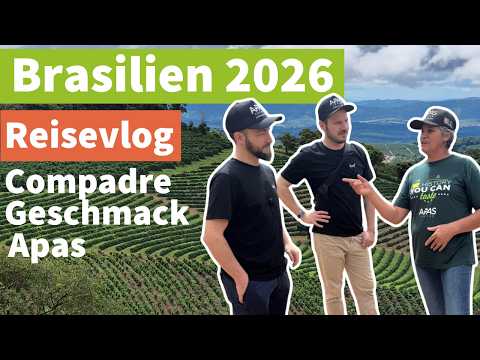
This video documents an intensive trip through Brazil's coffee regions (Minas Gerais, Espírito Santo), focusing on relationship building, quality development, and the diversity of Brazilian coffees.
🚜 Stops & Highlights
- APAS Cooperative: Visit to a organic cooperative with 60 members. They produce their own fungicides from mushroom cultures – independence from global markets. Key conversations about transparency and mutual dependency.
- Marcia's Farm (Bruno's mother): One of the first organic pioneers in the region. Intercropping (corn, flowers, grass) promotes biodiversity. Own production of bio-fertilizers.
- Copervas Lab: Sorting and quality control. 500 containers of coffee – only 100 for export, the rest stays in the local market (important lesson!).
- Farmers Coffee: Young, dynamic team (founders under 30). They grow Arabica and Robusta (Conilon). Focus on precision agriculture, sensory skills, and long-term partnerships.
- Homuo Family: 50% of the Arabica for the Kompadre blend. Extreme biodiversity: bananas, avocados, berries, coffee. Hand-picking and manual fertilization.
🔑 Key Takeaways
- Brazil is not one Brazil: Huge regional differences in cultivation methods, climate, and flavor. Nutty-chocolatey is only a cliché.
- Relationship over transaction: Personal visits are irreplaceable – WhatsApp and calls aren't enough for deep partnerships.
- Language barrier: Portuguese skills are essential (target: A1). Avoid losses in communication.
- Local market booming: Only 12–15% of coffee is exported – Brazil itself is the biggest coffee drinker.
- Challenges: Rising wages (pickers up to $50/day), land prices ($45,000/ha), competition from Robusta (higher yield).
📌 Conclusion
This trip confirms: Coffee is people business. Authentic on-site meetings build trust and innovation – for better coffees and sustainable partnerships.