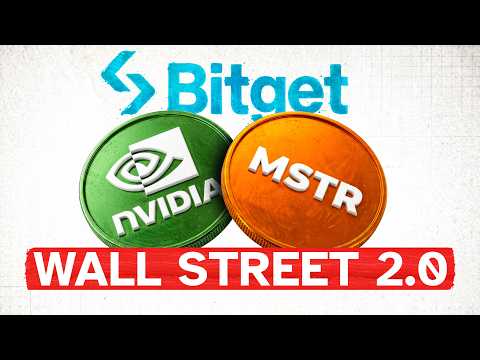
Stocks Are Going On-Chain And Wall Street Is SCARED
This video explains why tokenized stocks (RWAs) are revolutionizing the stock market. They offer 24/7 trading, lower fees, faster settlement, and transparency via the blockchain. Traditional stocks are limited to exchange hours and require multiple intermediaries.
Problems of the First Generation of Tokenized Stocks
- No real shareholder rights (no voting rights, ownership stays with the custodian)
- Low liquidity (thin secondary markets, wide spreads)
- Regulatory uncertainty and high complexity due to cross-chain bridges
BitGet's Stock 2.0 Model
BitGet introduced two products: Stock Plus and R Tokens.
- Stock Plus: Enables direct ownership of over 10,000 stocks. You invest directly, receive cash dividends, and can transfer stocks from other brokers.
- R Tokens: Tokenized US stocks and ETFs that track the price 1:1. No direct ownership, but compatible with DeFi (use as collateral, futures, copy trading, grid trading). You receive dividends automatically in USDT.
Benefits of R Tokens on BitGet
- One account for crypto and tokenized stocks
- Automated strategies via trading bots (Auto Invest, Smart Portfolios)
- First Cross-Asset Unified Account (UTA): Over 370 tokenized assets in a single margin pool
- Commission-free trading for R tokens, no management fees
- Up to $500,000 SIPC protection through the partner broker Alpaca
Risks & Conclusion
R tokens do not offer voting rights, dividends may be subject to deductions, and trading is not always 24/7. Using them as collateral carries liquidation risks. However, the potential is huge: Even a 1% tokenization of global stocks creates a multi-trillion dollar market by 2030. BitGet's Stock 2.0 could take a leading role.
Expert opinion: CEO Gracie Chen predicts that about 10% of all financial assets will be tokenized by 2030.