Nofinity Logo

Latest Analyses(7)

7 Years of No Growth: What Needs to Happen Now? Interview with Economic Advisor Monika Schnitzer
3 min read

7 Years of No Growth: What Needs to Happen Now? Interview with Economic Advisor Monika Schnitzer

Summary of the Interview with Monika Schnitzer

Monika Schnitzer, chair of the German Council of Economic Experts, provides a critical assessment of the German economy and outlines necessary reforms.

Current Economic Situation
  • Rating: She rates the economic situation at 5 out of 10 points. The expected growth of 4.5% for this year has been revised downward due to the Iran conflict.
  • Impact of Iran Conflict: Rising energy and transport costs are affecting consumers; further price increases are expected.
Pension Reform
  • Key Points: Raising the retirement age in line with life expectancy, abolishing the bonus-free early retirement at 63/64, and introducing a funded pension scheme (2 percentage points of contributions) as a supplement to the pay-as-you-go system.
  • Intergenerational Equity: The sustainability factor is to be reactivated, improving the distribution of burdens between young and old (older generation to bear one-third instead of one-quarter).
  • Criticism: Politicians hesitate to burden pensioners more, even though only 17% of retirees rely solely on the statutory pension.
Funded Pension vs. Generation Capital
  • Advantages: Higher returns through broad diversification in capital markets, individual claims for contributors.
  • Criticism of Generation Capital: Debt-financed investments are inefficient and vulnerable to political misappropriation.
  • International Examples: Sweden (4 percentage points, 9-11% returns) and the US (strong consumption due to equity pensions) show positive effects.
Tax and Subsidy Policy
  • Income Tax Reform: Relief for low incomes is insufficient because top tax rates do not generate enough revenue.
  • Subsidy Cuts: Examples include agricultural diesel and diesel tax breaks – necessary but politically difficult.
  • Inheritance Tax: Unequal treatment of business and private assets is facing reform (constitutional court ruling expected). Most heirs currently pay little tax (e.g., €400,000 allowance per parent).
Future Strategies
  • Focus on Innovation: Germany lags in promising fields like AI. New products and business models are needed, not just efficiency gains.
  • Framework Conditions: The state must create infrastructure (e.g., data centers), but companies and employees must also adapt.
  • Courage for Change: Reforms are finally taking bold steps; the population often shows more understanding than expected.
Conclusion

Schnitzer calls for an end to 'business as usual' and advocates courageous reforms that involve all social groups to secure long-term growth.

Is The AI Selloff A Buying Opportunity? | Warren Pies
4 min read

Is The AI Selloff A Buying Opportunity? | Warren Pies

In this episode of Forward Guidance, Warren Pies of 314 Research provides a deep dive into the current market turbulence. Although he remains fundamentally convicted in the AI revolution, he has recently downgraded his equity allocation to manage technical risks. His core methodology is "Build conviction on fundamentals, manage risk with technicals."

Why the Risk-Off Stance?
  • Market Consolidation: The market entered a strict trading range without new highs or lows, signaling a loss of momentum and a high potential for a trend change.
  • Lead Rotator Flashing Red: The market is being led by Staples (Consumer Non-Durables) . Historically, a market led by staples lacks the tailwinds needed for a sustained bull run in equities.
  • Credit Market Stress: Hyperscaler credit spreads are rising again past the levels seen in July. This signals that the leverage-heavy phase of the AI buildout is starting to feel the heat of high interest rates.
AI Sector: Bubble or Fundamentals?

Warren Pies dissects the recent AI selloff, concluding it is a technical/liquidation shock rather than a failure of the AI thesis.

  • Fundamentals Remain Strong:
    • GPU Scarcity: Availability is extremely tight (B200 at zero), and rental prices continue to rise. The Contango in the GPU market (higher forward prices) is interpreted as a positive signal of capacity hedging.
    • Strong Unit Economics: Hyperscaler cloud revenues are accelerating, and AI model profitability is surging (Anthropic saw revenue per compute dollar skyrocket from $0.57 to over $2.08).
    • The Logic Deficit: It is logically inconsistent to have rising GPU prices and falling Hyperscaler/Semiconductor stocks. This can only happen during a panic liquidation driven by leverage and sentiment, not a fundamental shift in supply/demand.
The Fed & Macro Risks
  • The New Inflation Driver: The primary driver of inflation has shifted from Oil to Tech/AI Capex. This makes it harder for the Fed to pivot to rate cuts.
  • Choking the Boom: The Fed risks choking off the supply side of the AI buildout by keeping rates high, as it is now heavily dependent on debt markets.
  • The Geopolitical Backstop: The AI race is a national security priority. A newly confirmed Fed chair might be reluctant to let rate hikes sabotage this crucial technological race.
The Energy Landscape
  • Geopolitical Stalemate: Pies analyzes the four US strategies (Targeted Bombing, Indiscriminate, Ground Invasion, Blockade). The Blockade is working but requires patience. The next move (Deal or Escalation) determines the oil price.
  • Explosive Crack Spreads: Margins for middle distillates (diesel) are extremely high. This will normalize over time through refinery switching and demand destruction. It is a sticky, but temporary, structural issue.
Conclusion & Outlook

Warren Pies advocates for discipline and patience. The AI conviction remains high, but the path is currently dominated by macro risks. The right strategy is not to force a trade, but to wait for the consolidation to break towards either a clear breakout or extreme capitulation.

Follow Warren on X (@WarrenPies) and explore his research at 314research.com.

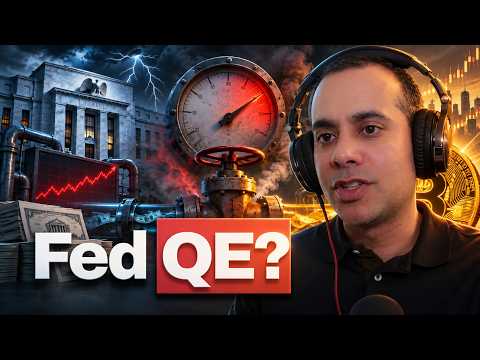
The Fed Will Have To Print Bigger This Time
2 min read

The Fed Will Have To Print Bigger This Time

Bottom line
  • Nick Batia argues the Fed may return to liquidity injections sooner than many expect via reserve management purchases / T-bill QE / “QE light”, even while fighting inflation.
  • He watches three under-the-radar money-market signals that show whether the system has enough liquidity.
1) Repo/SOFR spread
  • SOFR is the secured overnight repo rate. If it pushes above the Fed’s policy corridor (e.g., IORB), it signals collateral/liquidity tightness.
  • The spread has widened to 5 bps, the highest since tax day. Month-end, quarter-end, Thanksgiving and year-end rolls are likely pressure points.
  • Similar spikes previously preceded the Fed’s T-bill purchases. That tool remains ready.
2) T-bill supply
  • There are more than $7 trillion in T-bills, about 22% of marketable Treasuries.
  • This could rise toward $10 trillion / roughly one-third. Short-term government debt must be funded in the cash/repo market.
  • Banks may hoard reserves during stress rather than absorb more bills.
3) Bank reserves/GDP
  • Reserves are about 9% of GDP, low versus much of the past decade outside COVID.
  • Excess reserves barely existed before 2008; since then they are a trust/liquidity buffer. The 2019 repo crisis occurred near lows, followed by major QE.
  • With GDP rising and reserves flat, the system needs more Fed liquidity over time.
Bonus: TGA
  • The Treasury is rebuilding its TGA, implying more bill issuance. Batia sees this as a funding need, not a grand rate-manipulation scheme, though buybacks may help at the margin.
Takeaway
  • If the Fed resumes T-bill purchases, they may need to be larger this time because Treasury issuance is larger.
  • This is a key early signal for liquidity-sensitive assets like Bitcoin.
How Cooked Are We? 👀 BTC Post Midterm Price + the Last Growth Engine⚡
2 min read

How Cooked Are We? 👀 BTC Post Midterm Price + the Last Growth Engine⚡

The State of Markets

The host breaks down a brutal October for crypto and stocks, arguing the US economy is dangerously reliant on a single growth engine: AI.

❌ The Bad News: Storms Everywhere

  • Power is the Bottleneck: Morgan Stanley forecasts a 70 gigawatt power gap for US data centers by 2028.
  • Crypto Fear & Greed: Index dropped to 26 (extreme fear) . Bloodbath across the board: BTC (-8.5%), ETH (-14.8%), SOL (-20%).
  • ETF Bleeding: 4 out of 5 weeks red for Bitcoin ETFs. Even worse for Ethereum ETFs (7 out of 8 weeks negative).
  • Binance Drain: $15.4 billion outflows following the $6.3 billion hack.

✅ The Silver Lining & Historical Patterns

  • Bitcoin is Resilient: Up from $60k to $77.5k in just 2 months. Holding support at the short-term holder average price.
  • Seasonality: November is historically the strongest month for Bitcoin (avg +34%). A red October usually precedes a green November.
  • Midterms Bottom: Historically, BTC bottoms or rallies directly after the US midterm elections.
  • Whales Buying: Tether increased its stack to 150,000 BTC.

⚡ The Last Growth Engine: AI & SpaceX

  • Single Point of Failure: AI CapEx is the ONLY driver of US economic growth right now. Killing the AI trade would trigger a severe recession.
  • SpaceX Dominance: Planning a 333% growth surge in compute power to 13 gigawatts by 2027.
  • IPO King: SpaceX remains the largest anticipated IPO in history, dwarfing others like Anthropic.

🚗 Tesla & FSD

  • Tesla FSD subscriptions are exploding (+70% YoY), generating over $2B in pure profit. The fleet has covered over 27 billion km of self-driving miles.
  • Real-world adoption is spreading, with Europe next in line.

Core Message: The market is battered, but the players (SpaceX, Tether) are making massive bets on the future (AI, BTC). Don't lose faith in the long game. "If this potato can become vodka, you can become anything."

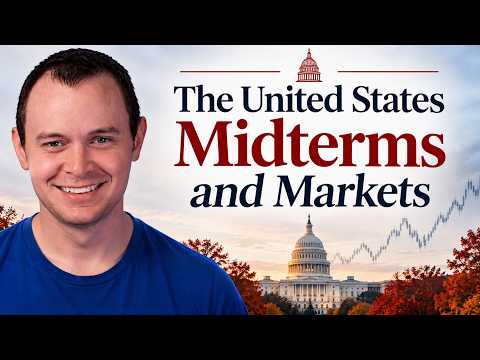
The United States Midterms and Markets
2 min read

The United States Midterms and Markets

  • The video analyzes how US markets historically react to different midterm outcomes – without political bias.
  • Currently there is a Republican trifecta; prediction markets favor a Democratic majority in the House and Senate.
Historical market returns by political regime
  • Best scenario since 1953: Democratic president with Republican Congress (median annualized return ~20%).
  • Republican trifecta also positive: avg 13.3%, median 13.6%.
  • Worst scenario: Republican president with fully Democratic Congress – avg 4.9%, median 4.0% (but returns remain positive: 12-month avg 4%).
  • Including data back to 1928, the Great Depression skews results for divided regimes.
  • Trifectas (Republican or Democratic) have historically performed similarly well (avg 9.8% vs. 9.0%; median 12.4% vs. 11.3%).
Risks and volatility
  • Democratic trifectas also saw severe bear markets (e.g., 1937: -39%, 2008: -38.5%).
  • Republican regimes show more extremes and higher volatility (e.g., 1987, 2020).
  • The return distribution shows that lower averages are not just due to a few outliers.
Current term in comparison
  • Trump's second term so far closely resembles his first (S&P 500 ~26% vs. ~20% after normalization).
  • It currently outperforms Biden's term, which was in a bear market at this point.
  • Bitcoin: Returns under Trump II and Biden are significantly lower than under Trump I and Obama II – likely due to macroeconomic issues (inflation, labor market).
Further statistics
  • Highest Sharpe ratio: Lyndon B. Johnson (1.96), followed by Roosevelt (1945) and Clinton.
  • Worst Sharpe ratio: Nixon's second term (-1.6).
  • Heatmaps and Z-score charts visualize returns and risk by congressional composition.
Conclusion
  • Historical data provide guidance, not guarantees. Uncertainty about the election outcome weighs on markets – polls can be wrong (see Brazil).
How North Korea Stole $6.3 Billion From Binance Without a Private Key
4 min read

How North Korea Stole $6.3 Billion From Binance Without a Private Key

On October 29, 2025, Binance – the world's largest crypto exchange – fell victim to the largest hack in history (crypto and beyond). North Korea stole roughly $6.3–6.4 billion from Binance hot wallets across multiple blockchains, almost a quarter of the country's annual GDP.

How the Hack Happened
  • Entry vector: A compromised laptop of a DevOps engineer (according to Binance). Binance later said there were additional points of breach.
  • No private keys: The attackers did not obtain private keys but manipulated Binance's signing infrastructure – like using a bank's pen to sign checks without opening the vault.
  • EIP-7702: On Ethereum, they used a novel technique: they pre-signed 50 transactions with different nonces. One of them converted the hot wallet into a smart account controlled by an attacker smart contract, sweeping all assets.
  • Automation: New deposits were immediately drained as they arrived.
  • Multiple chains affected: Ethereum, Bitcoin, Tron, Solana, XRP, etc. – indicating compromised infrastructure, not individual keys.
  • Pre-hack tests: About 3 weeks earlier, attackers tested the EIP-7702 method using Tornado Cash-funded wallets.
Response and Freezes
  • Swift freezes: Tether, Circle, Arbitrum Security Council and others froze nearly half the funds (~$3 billion). This is unprecedented – after the Bybit hack, initially less than 3% was frozen.
  • Criticism: Circle and Tether's fast response was likely linked to their business relationship with Binance.
  • Laundering and DeFi: The hackers used DeFi, including ThorChain, losing up to 10% on some swaps due to liquidity issues. MEV searchers earned ~$50 million.
  • Aave freeze: Aave froze markets to prevent the use of stolen stablecoins.
ThorChain and the Controversy
  • ThorChain became a major laundering channel for North Korea. In previous TraderTrader hacks, over 99% of daily volume came from laundering.
  • FBI warning: FBI, Secret Service and IRS named ThorChain directly, urging node operators to block transactions with stolen funds.
  • Centralization: ThorChain can be halted within minutes by a few node operators; becoming a node operator requires community approval – not very decentralized, according to Pablo.
  • Controversial statements: JP Thor was quoted with a new Aston Martin helicopter with a DPRK flag, and argued North Korea might use the money to feed children – widely criticized as absurd and ignorant of the regime's reality.
TraderTrader & North Korea's Cyber Operations
  • TraderTrader is a subgroup of North Korea's RGB (Reconnaissance General Bureau), responsible for major crypto hacks – from Ronin to Bybit and now Binance.
  • Name origin: Trojanized trading apps as malware decoys in fake job interviews.
  • Many subgroups: "Lazarus" has become a catch-all; different units have different TTPs.
  • AI & automation: Laundering is highly automated; AI likely plays a role, though not confirmed.
Lessons and Recommendations
  • Operational security is the weakest link – not smart contract bugs. ~90% of crypto organizations lack real OpSec expertise.
  • Deploy EDR (Endpoint Detection and Response) e.g., CrowdStrike (~$150/year). Most infiltrations start on a laptop.
  • Education: Leaders, security and compliance teams must understand the threat landscape (North Korea, TraderTrader etc.).
  • Industry stance: The industry must stop enabling mass laundering. Decentralization and permissionlessness should not become excuses to fund dictatorships.
  • Outlook: North Korea now holds more ETH than the Ethereum Foundation – a sad milestone.

Key takeaway: This hack was not a single exploit but a failure of operational security. The industry must prioritize OpSec before the next billion-dollar loss.

OpenAI's Numbers Are WORSE Than Anyone Thought
2 min read

OpenAI's Numbers Are WORSE Than Anyone Thought

The Financial Times Revelation
  • The Financial Times reported that OpenAI's annualized revenue is not $70 billion, but around $50 billion.
  • This $20 billion gap caused a sell-off in Nvidia, CoreWeave, SoftBank, and Oracle stocks.
Why the $70 Billion Figure Existed
  • Anthropic uses gross revenue (including cloud partner share), while OpenAI uses net revenue. To compare them, the market added the partner share back to OpenAI's number, creating the $70 billion estimate.
  • OpenAI never officially confirmed that figure, yet it was priced into contracts and valuations across the industry.
OpenAI's Spending Commitments
  • Internal plans show $856 billion in compute and infrastructure spending by 2030.
  • Major contracts: $300 billion with Oracle (starting 2027), up to $250 billion with Microsoft Azure.
  • Projected revenue for 2026 is only $36 billion – the commitments equal nearly 24 years of current revenue.
  • Cumulative free cash flow from 2026 to 2030 is forecast at −$278 billion.
Who is Financing the Buildout?
  • Nearly all construction is funded through private credit: GPU-backed loans, project finance, and bonds.
  • Companies like Oracle ($156B debt), CoreWeave ($52B debt), and SoftBank ($40B bridge loan + junk bonds) are deeply leveraged.
  • Lenders are betting that OpenAI's revenue will grow fast enough to cover the bills.
Conclusion
  • OpenAI has raised massive capital ($122B in March, another $30B now being negotiated), but the gap between revenue and spending remains enormous.
  • The entire AI infrastructure market faces a critical test: Can OpenAI deliver on expectations, or is a painful correction ahead?