Nofinity Logo
Onboarding

Welcome to Nofinity

Your premium hub to transform hours of YouTube video into concise, 5-minute text summaries. Build your custom expert feed!

1. Skip the Video

Save hours of watching. Read compact, AI-powered key takeaways in a premium magazine layout – completely ad-free.

2. Custom Feed

Subscribe to top experts in the Explore area to curate your personal, dynamically updating video feed.

3. Suggest Channels

Propose new YouTube channels. Once approved, our system automatically ingests and summarizes new uploads.

Latest Analyses(7)

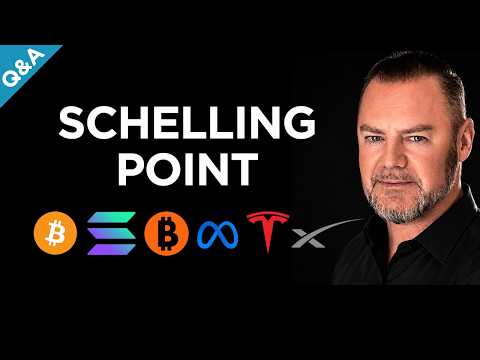
Will AGI Build A Better BTC? ⚡SOL vs Base + Meta Zone & SpaceX Upside 📈
InvestAnswers|16. Aug.

Will AGI Build A Better BTC? ⚡SOL vs Base + Meta Zone & SpaceX Upside 📈

🧠 The Shelling Point: The Key to Understanding Current Markets
  • Definition: A Shelling Point is the most obvious, intuitive solution in a complex situation – the signal in the noise. Ignore mainstream media and short-term chatter, focus on these undeniable facts.
  • The current Shelling Points (Signals) are:
    • Massive CapEx spending at Google, Meta, and SpaceX on AI infrastructure.
    • SpaceX: Projected to reach $100 billion ARR in September and targeting $1 trillion in revenue by 2030 – with unassailable moats.
    • Tesla: Despite temporary weakness, the signs are clear: FSD v15 is live, over 2,300 robotaxis are deployed, and gigantic factories are being built.
    • AI Growth: Demand for computing power (Nvidia chips) and memory (Micron) is exploding.
❓ Individual Stock Analysis & Allocation
  • Meta (Kill Zone around $520-530): The stock is weak due to declining profit margins and massive CapEx spending ($217 billion by 2028). There's a legitimate fear Meta will burn capital (as with the Metaverse). Wall Street sees 27% upside (price target $753), but potential is lower vs. other names.

  • Bitcoin vs. SpaceX:

    • Bitcoin (BTC): It's not a short-term 'get-rich' asset, but insurance against fiat collapse. Returns are diminishing (forecast ~87% to $120k in 2 years). Selling at the current bottom would be foolish, but an overweight allocation of 37% (like Eddie S.) is too high in the AI Age.
    • SpaceX: Has a much bigger growth story (65% upside in one year vs. 87% in two for BTC) and is the faster horse.
    • Conclusion: If possible, rotate a portion of your BTC and MSTR holdings into SpaceX (consider your tax situation).
  • Solana (SOL) vs. Base: No reason to worry. Solana still dominates with 184.7 million transactions vs. 9.5 million on Base and leads in Real-World Assets (tokenization) and stablecoin volume. The hype around the X42 protocol for AI agents has so far failed to materialize – reliance on a single token isn't necessary.

  • Tesla (TSLA): After the weaker quarter (energy margin from 39.5% to 20.4%) and poor sentiment, many retail investors sold. Smart money (e.g., Stan Druckenmiller) is buying heavily. The company is at an inflection point for mass adoption (FSD). Patience is key here. Summer and September could remain weak – keep dry powder ready.

  • Micron (MU): The memory boom is unbroken. Demand is growing 200%, but production only 20%. The price target is seen as an 'easy double' from $800 to $1,600.

👴 Practical Case: Inheritance & Taxes (STRC)
  • Situation: A 67-year-old father with a short life expectancy holds 2% of his wealth in STRC (MSTR bond yielding 12%).
  • Assessment: At such a small position, the risk is low. The tax benefits (step-up in basis) could justify holding. Still: SpaceX has higher potential than STRC's 12%. Professional tax advice is essential here.
📈 Market Outlook & Final Tips
  • Bitcoin: Moving along the bear market bottom ($59-60k). Plan initial purchases in the next 45-50 days.
  • Seasonal Weakness: Summer was bad, and September could be the worst month of the year. Be prepared and have limit orders ready.
  • Actionable Advice: Create a forward-looking allocation for 3-5 years. Don't trade week to week; play where the puck is going (Shelling Point: AI, Energy, Space). Replace positions, don't chase trends.
Rick Rubin: What Jay-Z Did in 30 Minutes Left Me Speechless!
The Diary Of A CEO|21. Sept.

Rick Rubin: What Jay-Z Did in 30 Minutes Left Me Speechless!

🎵 Jay-Z’s Creative Genius – 99 Problems in 30 Minutes
  • Rick Rubin describes how Jay-Z listened to the beat for 99 Problems, let it loop repeatedly, sat in the back mumbling/humming for 20–30 minutes, then went into the other room and recorded the first verse in just three takes. No written lyrics, everything was composed in his head.
  • Jay-Z’s process is unique: unlike other rappers, he never writes physically but shapes words and flow internally, like a saxophonist improvising a solo.
🎨 Creativity: Risk, the “Indefensible,” and the Inner Voice
  • “Indefensible” is a positive term for Rubin – it means pushing things to extremes beyond reason and expectations. Only through this can revolutionary works emerge.
  • Rubin stresses: Creativity is beaten out of us over our lives – by school, rules, and comparison. Instead, we should express ourselves freely and follow intuition (or “the universe”).
  • Comparisons are pointless: Michael Jackson vs. Prince, Kanye vs. Drake – each artist has a unique perspective. It’s not about better or worse, but authentic self-expression.
🧘 Meditation and Grounding
  • Rubin has meditated (Transcendental Meditation) since age 14. He meditates 20 minutes twice daily – often with artists like Tom Petty, Johnny Cash, or Red Hot Chili Peppers before sessions.
  • Meditation helps him see beneath the surface and connect with a deeper, intuitive level. For him, it’s the key to creativity and self-knowledge.
🔄 The Creative Process: Phases and Patience
  • Rubin distinguishes four phases: Seed, Experimentation, Crafting, and Completion/Editing. Only when the work is nearly finished should a deadline be set.
  • No pressure on art: Don’t let commercial expectations drive you. True greatness comes from doing what you love and offering it as a “gift to the universe.”
  • Examples of “miracles” in the studio: Johnny Cash’s debut album recordings were originally just tests in the living room – they turned out better than the studio versions.
💡 Failure, Risk, and Fresh Starts
  • Rubin himself experienced a severe depressive episode in his early 30s after a mentor was forced out. He felt like he had been shot with a poison arrow, had panic attacks, and couldn’t sleep. Therapy and antidepressants helped him.
  • This taught him: Sometimes something needs to die – a career, relationship, or lifestyle – so something new can emerge. Suicidal thoughts often come from feeling trapped, but in reality you can hit the reset button and start a whole new life.
  • “The soft overcomes the hard” – Rubin quotes the Tao Te Ching. Water drips on a rock and wears it away. Often non-action is the best action.
🎤 Collaborations with Legends: Johnny Cash, Tom Petty, Adele
  • Johnny Cash: Humble, quiet, deeply spiritual. Rubin learned humility and the power of silence from him.
  • Tom Petty: The ultimate craftsman – everything had to be in time and in tune, every word intelligible. He worked two years on an album without hurry.
  • Adele: She can sing a song 30 times in a row and nail it every time – like a throwback to 70s singer-songwriters. Authenticity is her hallmark.
📜 Book and Documentary
  • “The Creative Act: A Way of Being” (2023) – Rubin’s book on creativity as a life philosophy. It consists of 78 chapters (inspired by the 78 tarot cards).
  • “The Book of HOV” (HBO documentary, Sept. 2024) – An eight-part series on Jay-Z, revealing the poet and lyricist behind the businessman. Intimate, unusually personal insights.
🧭 Final Wisdom
  • “Don’t listen to what anyone tells you. Be true to yourself, work hard, never give up.”
  • Most great artists are “ordinary people who made a decision” – like Eminem, who constantly writes to become better.
  • Creativity starts with perspective: Go to museums, read old books, watch great movies. The best ideas often come from areas unrelated to your field.

Final question of the interview: Who would you call in a 60-second thank-you call? Rubin: His wife and child – they have changed his life and shown him the world with fresh eyes.

Thyroid health: interpreting symptoms, diagnosing & treating dysfunction, & navigating the gray zone
Peter Attia MD|21. Sept.

Thyroid health: interpreting symptoms, diagnosing & treating dysfunction, & navigating the gray zone

Introduction to Thyroid Complexity
  • Dr. Peter Attia explains why the thyroid is a complex topic: The Goldilocks principle applies – both too much and too little thyroid hormone are problematic.
  • Unlike testosterone, there is no natural overproduction of thyroid hormone, and symptoms are non-specific.
What is the Thyroid and Its Function?
  • The thyroid is a small gland with two lobes located above the voice box, producing the hormone T4.
  • T4 regulates metabolism in almost all body cells – acting as a "volume knob" for energy expenditure.
  • Too little thyroid hormone (hypothyroidism) leads to fatigue, weight gain, low heart rate. Too much (hyperthyroidism) causes anxiety, insomnia, atrial fibrillation.
  • 5% of adults in the US have clinically significant thyroid dysfunction – many are mismanaged.
Why is the Topic Controversial?
  • Thyroid regulation is complex: T4 is converted to the active hormone T3, but this process varies by tissue.
  • Two extreme camps:
    • Camp 1: Hypothyroidism is underdiagnosed and undertreated – any symptom like fatigue indicates a thyroid problem.
    • Camp 2: Hypothyroidism is overdiagnosed – only extreme cases are treated.
  • The truth lies in between: Both extremes can cause harm.
Symptoms vs. Lab Diagnostics
  • Symptoms like fatigue or weight gain are non-specific and may have many causes (e.g., sleep deprivation, iron deficiency, menopause).
  • Lab testing (TSH, T4, T3) is crucial – symptom assessment alone is insufficient.
Common Mistakes in Practice
  • Mistake 1: Doctors ignore thyroid antibodies or family history when TSH is "normal" (e.g., 4.2).
  • Mistake 2: Functional medicine often treats subclinical hypothyroidism unnecessarily based on borderline T3 or elevated reverse T3, even though values would normalize on their own.
  • Thyroid hormone treatment is not benign: Risks include cognitive issues, atrial fibrillation, bone loss.
  • Many patients oscillate between extremes – both overreach.
Conclusion
  • A balanced, lab-guided approach considering symptoms and risk factors is key to accurate diagnosis and treatment.