Nofinity Logo

Latest Analyses(6)

Pagani V12 Heaven: Utopia, Zonda & Huayra Driven!
3 min read

Pagani V12 Heaven: Utopia, Zonda & Huayra Driven!

Summary: Pagani V12 Heaven – Utopia, Zonda & Huayra Driven

This video offers an exclusive drive featuring three generations of Pagani roadsters: the Zonda F Roadster, the Huayra Roadster HP, and the brand-new Utopia Roadster. The film traces the evolution of the brand, from the Zonda's origins to the current Utopia, showcasing how Horacio Pagani has realized his vision of perfection.

The Cars in Detail:

  • Pagani Zonda F Roadster (2006):

    • Engine: 7.3-liter V12 (Mercedes-AMG), 650 hp, 6-speed manual.
    • Characteristics: Lightweight (1,230 kg dry), pure, analog driving experience. The start of the Pagani legend.
    • Conclusion: A masterpiece of lightweight construction with stunning sound and direct feel.
  • Pagani Huayra Roadster HP (Horacio Pagani’s personal car):

    • Engine: 6.0-liter twin-turbo V12 (Pagani-branded), approx. 800 hp (BC spec), 7-speed sequential with paddle shifters.
    • Characteristics: Extreme, aggressive, technically more refined than the Zonda, but less pure.
    • Conclusion: A wild, intense experience with overwhelming power and aggressive character.
  • Pagani Utopia Roadster (2024):

    • Engine: 6.0-liter twin-turbo V12, 864 hp, 7-speed manual (dog-leg first gear).
    • Characteristics: Combines the Zonda's lightness with Huayra's power. Beautiful, clean design and everyday usability.
    • Conclusion: The pinnacle of Pagani's philosophy – a return to the essence of driving, paired with modern technology.

Historical Context:

  • Zonda (1999-2011): The meteor that reinvented the supercar world. Lightweight, naturally aspirated V12, manual transmission – an unforgettable experience.
  • Huayra (2012-present): Technological progress with turbochargers, but initially a bit overdone. Later versions (like this HP) are fantastic, however.
  • Utopia (2022-present): A return to purity. Manual transmission, lightweight, clean design – the perfect synthesis of all Pagani virtues.

The Verdict: Which is the Greatest Pagani Roadster?

  • Zonda F Roadster: The winner from an emotional standpoint. The purest and most immersive experience.
  • Huayra Roadster HP: The surprising dark horse. Extremely intense and fast.
  • Utopia Roadster: The most balanced choice. Offers the best combination of driving fun, performance, and daily usability.

Conclusion: All three are unique. The choice depends on personal taste: Zonda = Purity, Huayra = Extremes, Utopia = Perfection.

Metric Conversions (from original imperial units):
  • 1,230 kg dry weight (approx. 2,710 lbs)
  • 7.3 liters displacement
  • 6.0 liters displacement
  • 650 hp (kW: 478)
  • 800 hp (kW: 589)
  • 864 hp (kW: 636)
Is the MARO the Best Home Espresso Machine?
3 min read

Is the MARO the Best Home Espresso Machine?

Lance Hedrick provides an in-depth review of the Maro Model One espresso machine, highlighting its €4,999 price and innovations. Built by two young entrepreneurs from about 430 locally sourced components.

Build & Design
  • Materials: Hi-Max (mineral-based acrylic composite) body, anodized aluminum top (~2 kg), stainless steel drip tray and water tank. Total weight: ~30 kg.
  • Criticisms:
    • Power switch: Feels spongy, requires precise pressure.
    • Water tank: Requires an Allen key to remove; otherwise, it gets stuck.
    • Drip tray: Sharp edges and water splashes during transport.
Brew Group & Heating System
  • Brew group: 58 mm, E61-compatible, with a thick-film heater (2,300 W) – no boiler, but an in-line heater.
  • Heat-up time: ~3–4 minutes to idle, then rock-solid temperature.
  • Energy consumption: 0.06 kWh per 2 shots – only the Zuriga is better (0.058 kWh). For comparison: Lelit Mini R uses 0.38 kWh, Ascaso Steel Duo 0.12 kWh.
Pump & Flow Control
  • Rotary pump (Fluid-o-Tech), extremely quiet – almost as quiet as lever machines.
  • Closed-loop system with flow meter and pressure sensor at the brew head, using PWM to precisely control flow and pressure.
User Interface & Profiles
  • Three modes: Explorer (simple), Expert (intermediate), Extreme (advanced).
  • Explorer: Shot Saver adjusts flow, Grind Analyzer gives feedback. Volumetric is precise (±1.5 g), with a Bluetooth scale even to 0.1 g.
  • Expert: Settings for pre-infusion time, temperature, brew pressure, dose, and yield.
  • Extreme: Multi-step profiles with flow/pressure targets and exit conditions (time, weight, pressure). Criticism: UI less intuitive than Decent, no curve smoothing, only linear steps. Recipes are sorted by roaster, only 3 pinned profiles visible.
Steam & Hot Water
  • Steam wand: PTFE plastic, cool to the touch. Optional stainless steel upgrade for €39. Steam is wet but functional.
  • Hot water: Some presets, but the spout drips and splashes – room for improvement.
Customer Service & Updates
  • WhatsApp support from the founders, response time usually <24 h.
  • Regular software updates (via YouTube, German only), current software is up-to-date.
  • Retrofit kit for direct water connection available (only for black model at no extra cost).
Taste Tests
  • Dark roast: Initially ground too coarse, Shot Saver corrects the flow. Result: sweet, low bitterness, good crema.
  • Light roast: With Goopy Lever profile at 88 °C: nectarine, tropical fruit juice – extremely thick texture. Ratings: Sweetness 4/5, Acidity 5/5, Bitterness 1/5, Body 4/5.
Conclusion & Comparison
  • Strengths: Energy-efficient, extremely quiet, precise temperature, versatile profiles.
  • Weaknesses: Tank removal cumbersome, sharp edges, UI could be more intuitive, hot water spout messy.
  • Competition: Decent (stronger community, dynamic temperature profiling, but louder). Unica Pro (quieter, better steam, but older tech). Lance would choose Decent if he could keep only one machine.

Verdict: A premium machine with innovative technology, ideal for energy- and noise-conscious users and those who love to experiment.

Is Bitcoin DEAD?
2 min read

Is Bitcoin DEAD?

📉 Bitcoin Crash and Capitulation
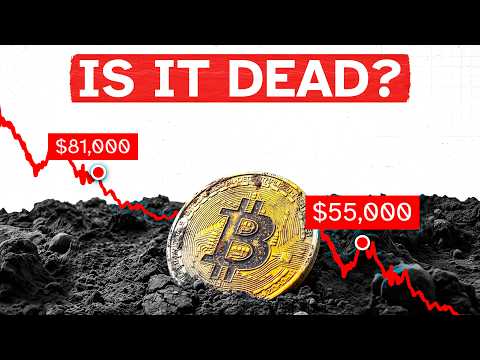
  • Bitcoin dropped to $55,000 over the weekend – its lowest since September 2024. Triggered by a liquidation cascade: over $2.7 billion in leveraged positions were forcibly closed within 24 hours (the 11th largest such event).
  • The crash began with a Nasdaq decline and hit concentrated long leverage near $60,000. When that level broke, sell-offs triggered further liquidations.
🔍 Who Sold and Why?
  • Short-term holders (cost basis ~$74,100) realized losses of over $11 billion in the crash week – about eight times more than profits. This is considered capitulation.
  • Macro pressure: Markets expect a Fed rate hike in December, with 10-year Treasury yields near 5%. This weighs on risk assets like Bitcoin.
  • Who bought? The Saturday recovery was driven mainly by short liquidations (longs were barely active). Wall Street ETFs saw $3.5 billion in outflows in November, stablecoin reserves shrank by $16 billion.
📊 Is the Bottom In?
  • The realized price (average cost of all coins) is $53,700. Bitcoin stopped just above it – a historically important support line.
  • Glassnode cites two signals for a true bottom:
    1. A renewed increase in stablecoin supply (fresh capital).
    2. A reclaim of $74,100 (the entry price of recent buyers).
  • Conclusion: Bitcoin is not dead, but a sustainable recovery requires new buyers. As long as capital flows out, the market remains vulnerable.

Author's view: The forced selling is over, but real buyers have yet to return.

How Sustainable is Your Portfolio?
2 min read

How Sustainable is Your Portfolio?

Sustainable Investing: Focus on the Floor of Your Wealth

This video argues that maximizing the floor of your wealth (i.e., your portfolio value during market downturns) is key to long-term success. The analyst advocates for value investing as a sustainable strategy independent of market cycles.

  • Core Idea: Instead of chasing constant gains, aim to preserve purchasing power over multiple cycles. Performance during market troughs (e.g., 2009, 2020) matters more than boom periods.
  • S&P 500 Concerns: Despite 17 strong years, there have been decades with real losses of 60%. Current valuations (cyclically adjusted P/E) resemble the dot-com bubble, signaling risk of unsustainable earnings.
  • AI Bubble?: Analyst questions sustainability of AI-driven earnings (Nvidia, Alphabet). A significant part of Alphabet's profit comes from non-operational sources (e.g., stake in Anthropic). Circular financing (governments borrowing to buy AI chips) could prove unstable.
  • National Debt: US debt is rising rapidly, with interest payments already consuming the defense budget. Solving it via inflation would erode real purchasing power.
  • Value Investing as Answer: Focus on undervalued companies with strong fundamentals (e.g., dividends, low P/E). Goal: annual return of 5.5 % regardless of market conditions.
  • Alternatives Criticized: Commodities like copper are overpriced (marginal cost $8,000/ton vs. current $12,000), gold ($5,000/oz) and Bitcoin (pure speculation) are risky. Farmland and private equity offer no real protection in a broad market crash.
  • Conclusion: Value investing provides a sustainable strategy to build long-term wealth without relying on market bubbles.
Aging Is a Software Failure, Not Cellular Damage
3 min read

Aging Is a Software Failure, Not Cellular Damage

Summary: Aging as a Software Failure – The Bioelectric Revolution

This video presents Dr. Michael Levin's (Tufts University) groundbreaking hypothesis: Aging is not primarily hardware damage (DNA mutations, cell wear) but a breakdown of the bioelectric software that coordinates our anatomy.

💡 Core Idea: Anatomical Software vs. Hardware
  • Our genome is the physical hardware.
  • Bioelectric networks (slow, steady DC voltage gradients across cell membranes) act as the software, instructing cells where they are and what structures to build/maintain.
  • When this communication fails, cells “forget” their role – leading to aging and poor regeneration.
🧪 The Landmark Frog Study (Science Advances, 2022)
  • Researchers tested this on adult African clawed frogs (Xenopus laevis), which normally cannot regenerate limbs.
  • Method: A wearable Biodome (silk protein shell) was sewn over the amputation stump for just 24 hours. The shell contained a cocktail of five compounds:
    • BDNF (nerve survival & axon growth)
    • 1,4-DPCA (limits scarring, promotes blood vessels)
    • Growth hormone (cell proliferation)
    • Resolvin D5 (inflammation resolution)
    • Retinoic acid (limb patterning)
  • Result: After a single day of treatment, limbs grew autonomously for 18 months:
    • 76 % of treated frogs developed complex, paddle-like structures with bone, blood vessels, and nerves.
    • The regrown limbs were sensitive to touch and used for swimming.
  • Key takeaway: Cells already possess the genetic program – they only need a short trigger to restart it.
⚡ Bioelectricity: The Language of Tissues
  • Cells communicate via gap junctions (tiny protein tunnels) and ion pumps.
  • This creates electric maps that precede physical anatomy (e.g., the “electric face” in frog embryos).
  • By manipulating these voltage patterns, researchers could grow eyes on the gut of embryos.
  • Morphostasis = active maintenance of anatomical form through constant electric exchange.
🧬 Aging as Communication Collapse
  • Over time, ion channels and gap junctions degrade (due to oxidative stress, inflammation).
  • Cells become electrically isolated – their “coordinate map” fades.
  • Consequence: Tumor-like growths (as seen in decoupled frog cells) or general tissue aging.
  • Hypothesis: Restoring youthful electric coupling could slow or even reverse aging.
🔬 Outlook and Realism
  • Morphoceuticals Inc. (co-founded by Levin and Kaplan) is working on preclinical rodent models for kidney, liver, and fibrosis repair.
  • Advantage: 20 % of existing drugs already target ion channels – possible repurposing.
  • No human clinical trials yet. Translating from amphibians to mammals remains a major hurdle.
  • Nevertheless, the research shows: Cellular hardware alone isn't enough – bioelectric “software” is key to regeneration and longevity.

👉 What do you think of this software perspective on aging? Share your thoughts in the comments!

Access the Power of Now to Experience Life More Fully | Eckhart Tolle
3 min read

Access the Power of Now to Experience Life More Fully | Eckhart Tolle

Introduction

In this episode of the Huberman Lab Podcast, Andrew Huberman speaks with Eckhart Tolle, one of the most renowned teachers of consciousness. The aim is to provide practical tools to experience the present moment more fully and live a richer life.

Core Concepts: Being vs. Thinking
  • Being present means consciously taking in sensory perceptions without immediately labeling or judging them.
  • Most people identify with their constant stream of thoughts (the 'ego') and thus miss the depth of the present moment.
  • Two ways of knowing:
    1. Conceptual knowledge (names, labels, judgments)
    2. Non-conceptual knowledge (direct, experiential awareness)
  • The key is to find inner stillness – a space beyond thought where pure awareness resides.
Daily Practices
  • Conscious sensory perception: Look around, listen to sounds – reduce thinking.
  • Listening to silence: In a quiet environment, perceive outer silence; it naturally leads to inner stillness.
  • Mindful routine actions: E.g., washing hands – feel the water temperature, the scent of soap.
  • Acceptance of the Now: Don't resist the present moment; accept it – this opens access to a deeper power.
Challenges as Growth Opportunities
  • The world is not here to make you happy; it challenges you to become more conscious.
  • Problems, failures, and other people are your 'curriculum' – they help you see through the ego and strengthen your Being.
  • Non-judgment: Even with difficult people, you can sense the pure Being behind their personality.
The Triangle Metaphor
  • Imagine a triangle: The base consists of life's opposites (good/bad, success/failure).
  • The apex is awareness. From there you can engage with the world without getting lost in it.
  • The goal is to keep returning to the apex – a place of inner power independent of external circumstances.
Avoiding Ego Traps
  • Success can inflate the ego and block access to the deeper power.
  • Authenticity is crucial: Those who don't assign themselves a special role remain open channels for energy to flow through.
  • Playfulness: Meditation and mindfulness don't have to be heavy or serious – they can also be joyful.
Final Thought
  • You are already complete on the level of Being. It's not about achieving something, but about consciously experiencing what has always been there.
  • Use the Now – it's the only moment that truly exists. Live from the apex of the triangle, and life will flow with greater ease.