Nofinity Logo
Onboarding

Welcome to Nofinity

Your premium hub to transform hours of YouTube video into concise, 5-minute text summaries. Build your custom expert feed!

1. Skip the Video

Save hours of watching. Read compact, AI-powered key takeaways in a premium magazine layout – completely ad-free.

2. Custom Feed

Subscribe to top experts in the Explore area to curate your personal, dynamically updating video feed.

3. Suggest Channels

Propose new YouTube channels. Once approved, our system automatically ingests and summarizes new uploads.

Latest Analyses(7)

🚀How to set yourself up for success! What is happening w AI Rotation? 💸
InvestAnswers|07. Juni

🚀How to set yourself up for success! What is happening w AI Rotation? 💸

🚀 How to Set Yourself Up for Success! What is happening w AI Rotation? 💸

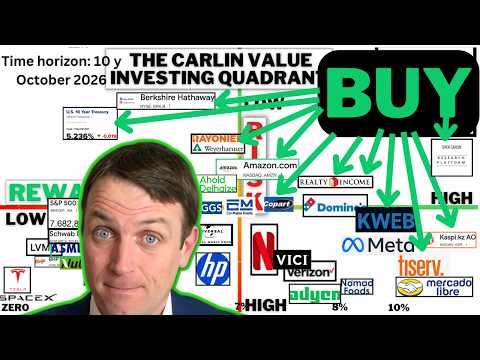
The speaker analyzes current market movements, specifically the so-called "rotation to AI," and warns against blindly following the herd. He shares his personal investment strategy, which is based on data and mathematics, emphasizing that he does this for sport – his goals are not necessarily the viewers'.

🧠 The Golden Rules of Investing
  • Rule #1: Never lose money. (Attributed to Warren Buffett)
  • Rule #2: Don't forget rule number one.
  • Never follow the herd, or "your head will be handed to you."
  • Do your homework, identify winners, and be patient.
🪣 The Bucket Strategy
  • 80% Hodl Bag: Safe long-term compounders (e.g., real estate, Tesla, Bitcoin since 2017).
  • 20% Exotic Trading Bag: High-risk plays ("tigers and lions"). Gains from this bag are rotated into the Hodl Bag.
  • Money Market: A safe haven for excess cash. Evolved from Bitcoin → MicroStrategy → now "Real-World AI" (autonomy, humanoid robots).
⚖️ Is Tesla's 50% allocation justified?
  • Yes, because Tesla targets the largest addressable markets (TAM) with complete vertical integration: energy storage, autonomous driving, humanoid robots.
  • Each market is worth trillions. No one else is remotely close.
  • What could trigger a trim? A larger TAM hunter. Details in the next video.
🤔 Should I invest in Marvell Technology (MRVL) now?
  • No. The speaker warns: "Don't chase! "
  • A 4x return doesn't excite him; he aims for 10x.
  • Marvell was added to the S&P 500 but has already spiked. Buying now is chasing and dangerous.
🐂 Has AI killed Crypto?
  • Partially. There's a historic structural shift towards AI.
  • Example: Campbell's (soup) was kicked out of the S&P 500 for Marvell.
  • Crypto isn't dead, but liquidity is flowing to AI. Everyone is waiting for the SpaceX IPO.
  • Don't sell the bottom of crypto to buy AI, you are 3 years too late! Focus on the next big rotation.
🔄 The Pair Trading Experiment (Tesla & EOS)
  • An experimental pair trade between Tesla and EOS shows an 85.71% win rate using the ATR model and 91% with the trend model.
  • 8 buy and 7 sell signals since mid-March.
  • Caution: This is a risky experiment, not general advice.
🏥 Why no Healthcare in the portfolio?
  • The speaker only invests in what he understands. He doesn't understand healthcare.
  • The sector is too risky (fraud, regulation, billing fraud).
  • A 10% allocation would dilute his focus.
💰 Retirement Strategy (Retirement Cocktail)

A 5-step framework to generate $100k/year:

  • Step 1: 1 year of expenses in cash.
  • Step 2: 5 high-conviction assets (long-term engine).
  • Step 3: Sell the most overvalued asset first.
  • Step 4: Sell in layers on spikes, be tax-efficient.
  • Step 5: Create a composite score using overvaluation, size, future growth, and tax scores.
🚀 SpaceX IPO – How to profit?
  • Don't chase the first trading day! Price may spike and then revert.
  • IPO flippers will sell.
  • Options on the mean reversion could be more lucrative.
  • ETFs (like QQQ) will likely enter much later.
  • Expect extreme volatility for 2 weeks. Those who missed the IPO allocation will buy back their sold positions (like Bitcoin).

Key Message: Don't be a sheep. Identify winners early. Have a plan (Bucket Strategy). Don't chase, it's the "kiss of death." Use rotations to your advantage, but at the right time.

Why Heating is Getting MORE EXPENSIVE (and what you can do about it)
Finanzfluss|04. Okt.

Why Heating is Getting MORE EXPENSIVE (and what you can do about it)

Why Heating is Getting More Expensive (And What You Can Do About It)

The Current Situation: Are Heating Costs Exploding?
  • Gas price increase: The gas price has risen by two and a half times since January 2025.
  • Main reason: The conflict in Iran and the blockade of the Strait of Hormuz, through which a quarter of the world's shipped oil and a fifth of its liquefied natural gas (LNG) passes.
  • Global impact: Although Germany is hardly directly affected, global market prices are rising for everyone.
  • Gas storage: The targeted fill level of 80% before winter is not expected to be reached.
Specific Costs for a Sample Apartment (70 m²)
Energy SourceProjected Costs 2026Price Change vs. Previous Year
Heating Oil1,275 €+24 %
District Heating1,310 €hardly more expensive
Wood Pelletsincreasing+17 %
Natural Gas (existing customers)decreasing (temporarily)-4 %
Heat Pump735 €+3 %

Important: The average gas price is falling temporarily for existing customers because utilities purchased cheaply and the gas storage levy was dropped. However, new customer tariffs are over a third more expensive. Price increases of 10-20% are expected for existing customers at the turn of the year.

Additional Cost Drivers
  • Network charges: Make up about one-fifth of the gas price and have risen by 10%.
  • CO₂ price: Was 55 € per ton in 2025, currently between 55 and 65 € per ton in 2026.
What Can You Do? 10 Saving Tips

Free & Easy Tips

  1. Bleed your radiators: Especially important on upper floors. Air in the system reduces efficiency. Easily done with a radiator key from a hardware store.
  2. Ventilate properly: Open windows wide several times a day instead of leaving them tilted constantly. A hygrometer helps monitor humidity and prevent mold.
  3. Heat strategically: Every degree you lower the thermostat saves roughly 6% heating energy. Heat rooms according to their use (see recommendations from the German Environment Agency).
  4. Circulate the air (with high ceilings): A fan on a low setting distributes warm air more effectively in the room.
  5. Close stairwell and apartment doors: Prevents cold drafts and heat loss.

Tips with a Small Budget & Effort

  1. Seal windows and doors: Check for drafts (e.g., with a strip of paper) and seal them with draft excluder tape from a hardware store. Savings: approx. 13 € per window per year.
  2. Use a low-flow shower head: Reduces hot water consumption (approx. 12% of energy use) and saves money.

Financial & Strategic Tips

  1. Secure current prices: If you have your own gas contract, switch to a tariff with a price guarantee to lock in the current rate for a year.
  2. Check your utility bill!
    • Deadline: Your landlord must present the bill for 2025 by Dec 31, 2026. If it is late (due to their fault), you don't have to pay the balance.
    • Apportionment: Check if costs are distributed fairly.
    • Disallowed costs: Repair costs, bank charges, or postage cannot be passed on by the landlord.
    • Right to reduce payment: If heating costs are not billed based on consumption, you can reduce your share by 15%.
  3. Adjust monthly advance payments: Increase your monthly payments or build a small reserve in a savings account to avoid unexpected large bills.
Conclusion

You are not helpless against the price increases. With the tips mentioned alone, an average of 465 € per year per apartment can be saved. Act now, because your consumption this winter will determine the amount of your additional payment in 2027/2028.


Further Information:

  • The full interview with energy economist Malte Küper is available on the Finanzus podcast.
  • A detailed guide on checking your utility bill is available in the newsletter.
The Ultimate Technique for Perfect Moka Pot Coffee
Lance Hedrick|03. Okt.

The Ultimate Technique for Perfect Moka Pot Coffee

The Ultimate Technique for Perfect Moka Pot Coffee

This video presents a refined brewing method for the Moka pot (stovetop espresso maker), based on modern coffee science and the physics of the device. It aims to improve the traditional technique without losing its essence. Key points:

  • Water temperature: Start with room temperature water (exception: stainless steel Moka → ca. 50 °C). This prolongs extraction and gently releases volatile aromas at 50‑60 °C.
  • Grind size: Use a medium‑coarse to coarse grind (similar to a coarse V60). Finer grinds create too much pressure and push temperatures above 110 °C – harming flavor.
  • Dosage & ratio: Fill the basket level (not heaped). Water in the base just below the valve. A ratio of about 1:5 (water:coffee) in the base yields roughly 1:3 in the cup.
  • Aeropress filter: A paper filter on top of the coffee bed produces clearer coffee and removes sediment.
  • Active flow control: Once coffee emerges, briefly lift the pot from the heat or lower the heat to slow flow to about 1 gram per second. This keeps temperature lower and extraction even.
  • Avoid the Stromboli effect: Stop brewing before heavy sputtering (air bubbles in the riser tube). The final sputtering often adds bitterness and leathery notes – better to discard it.
  • Adjust aftertaste: If the Moka tastes too sour or intense, dilute with hot water. This reduces perceived acidity and unfolds aromas.

Conclusion: The classic Moka pot can produce exceptional coffee if you actively control temperature, start with cool water, and avoid over‑fine grinding. This technique requires attention but rewards you with a much better cup – even with light roasts.

Slow, quiet, almost zero retention – we like the Compak Fino
Kaffeemacher|03. Okt.

Slow, quiet, almost zero retention – we like the Compak Fino

Summary: Compak Fino – Single-Dosing Grinder with Character

The Compak Fino is a Spanish single-dosing grinder with a 63 mm conical burr set. It comes in two versions: with scale (approx. €790) and without scale (approx. €599). The scale version also includes LED lighting.

Single-Dosing & Retention
  • Principle: Weigh beans before grinding, add to grinder, and aim for minimal retention.
  • Retention is phenomenal low – only 0.1 g in our test – one of the best values ever measured.
  • The built-in scale shows output weight, but is considered not essential. An external scale for pre-weighing is sufficient.
Speed & Noise
  • Speed: 18 g in about 15 seconds (360 RPM) – not the fastest, but acceptable.
  • Noise: Only 78 decibels while grinding – very quiet for a grinder.
Grind Adjustment
  • Excellent dial: Fine markings allow precise adjustments. One line changes extraction time by 1–2 seconds.
  • Repeatability is not perfect: returning to a previous setting can cause 4–5 seconds deviation. Tip: always approach from the same direction (e.g., from coarse).
Particle Distribution & Taste
  • Conical burrs produce a relatively narrow main peak – comparable to the Niche, but slightly cleaner.
  • Best suited for: medium to dark roasts. Delivers full-bodied, sweet espresso with well-integrated acidity. Light roasts are possible but less clear.
  • The grinder is easygoing and great for exploring different coffees.
Cleaning & Handling
  • Magnetic chute is removable. Burr chamber accessible with tools (hex screw).
  • Anti-popcorning lid prevents beans from jumping.
  • Regular cleaning: once a month (more often for dark roasts).
  • Minimal static; the heavy dosing cup (250 g) stays put, but coffee should be fluffed after tapping.
Conclusion

The Compak Fino is a high-quality, durable entry-level grinder. It is quiet, precise, and delivers balanced flavor. The premium for the scale seems unjustified – the version without the scale is the smarter buy.

In short: Slow, quiet, almost zero retention – a recommended single-dosing grinder.

Crypto Has CHANGED (You Need To Know How)
Coin Bureau|03. Okt.

Crypto Has CHANGED (You Need To Know How)

From ICO Hype to Real Economics: How Crypto Has Fundamentally Changed

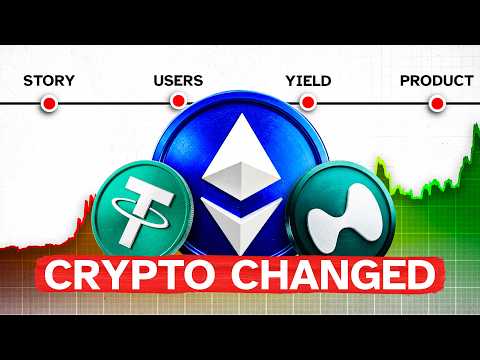
The video by The Coin Bureau explains the profound shift in the crypto industry: from speculative ICOs to protocols that generate actual revenue. The focus is on the question that now defines every token: What does this protocol actually do, and who pays for it?

The ICO Era: Stories over Substance

  • 2017: A whitepaper, a logo, and a Telegram group were enough to raise millions – without a product or testnet.
  • ICOs raised over $20 billion, but four out of five projects turned out to be scams or failed.
  • Regulatory wave: The SEC declared DAO tokens as securities, China banned ICOs, and Telegram had to return funds.

DeFi Summer 2020: Activity Yes, But No Value Creation

  • Liquidity Mining: Protocols like Compound lured users with freshly minted tokens (e.g., COMP) – essentially “renting” users.
  • SushiSwap pulled over $1 billion from Uniswap by offering incentives.
  • Core problem: Even the top protocols (Uniswap, Aave, Compound) didn’t pass fees to token holders – only governance rights, no revenue share.

The 2022 Collapse: Returns Without a Source

  • Terra/LUNA offered 20% yields on UST – the peg collapsed, wiping out billions.
  • Celsius froze withdrawals, FTX collapsed – in all cases, there was no real revenue source.
  • Lesson: The question “Where does the yield come from?” became central.

Today: Protocols with Real Business Models

  • Stablecoins: Tether (net profit $1.5B in Q2 2024) and Circle ($668M) invest in US treasuries and keep the interest – an extremely profitable model.
  • Tokenization of RWAs: BlackRock’s BUIDL fund and Ondo list tokenized stocks and ETFs – bringing traditional financial products onto the blockchain.
  • Hyperliquid as a pioneer: This perp DEX generated $429M in revenue (Jan–Sep) through fees, with up to 99% going to an Assistance Fund that buys and burns HYPE tokens. Additionally, 90% of USDC reserve yields feed buybacks.
  • Fee Switches: Uniswap, Aave, Jupiter, and Sky introduce fee mechanisms that pass revenue to token holders – a paradigm shift.

Conclusion: The Best Product Wins

  • Institutional investors now understand dashboards with fees, reserves, and buyback programs – this aligns with traditional finance logic (revenue, reserves, capital returns).
  • Competition: In 2017, the best marketing won; in 2021, the most generous token emissions; today, the best product with real revenue wins.
  • Question to viewers: Is revenue the only criterion? Or do story-driven projects still have a chance?