
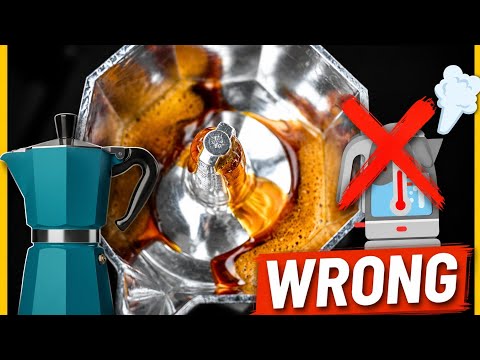
We've Been Wrong About Moka Pots
-
Main thesis: For decades, the moka pot's function has been misunderstood. The key factor is not steam pressure, but the thermodynamic relationship between pressure and heat generation versus pressure relief.
-
Role of headspace: The headspace in the lower chamber is the engine of extraction. Hot air expands and pushes water up before steam forms. This has been confirmed by studies (Navarini 2009).
-
Size matters: Smaller pots (e.g., 1-cup) are more self-regulating and forgiving because water removal causes a larger relative pressure drop. Larger pots (6-cup and up) yield higher temperatures and pressures at the end of extraction.
-
Water level: A lower water level (below the valve) reduces brew temperature and extraction temperature, potentially reducing bitterness. Adjusting water volume manipulates the balance between pressure relief and heat/pressure generation.
-
Water temperature: Room temperature water leads to cooler extractions and prevents over-extraction at the end. Boiling water results in very high temperatures and potentially bitter coffee.
-
Grind size and dose: Grind size determines resistance. Finer grinds increase pressure and temperature; coarser grinds decrease them. Too coarse can break the pressure seal. Always fill the basket to the top for a proper seal. Tamping is not recommended with fine grinds as it increases pressure.
-
Aeropress filter: An Aeropress filter paper can clarify the cup and improve extraction efficiency without significantly affecting pressure.
-
Practical application: For light roast coffee: coarse grind, lower water level (about 120 g in a 3-cup pot), room temperature water. This yields an extraction yield of about 19% and TDS around 6%.
-
Conclusion: Understanding thermodynamics allows you to dial in any moka pot (regardless of size, material, or style) to your taste preferences.


