Coin Bureau|01. Okt.
The Crypto Privacy WAR Is Here.
Introduction
The transcript explains the current crypto privacy conflict with a vivid example: A designer gets paid in USDC and can view his client's entire financial history via a block explorer – no hacking required. The core issue: Bitcoin & Co. are not private payment systems but the most transparent financial ledgers in history.
Historical background- Early pioneers like David Chaum and the Cypherpunks wanted money that no one could watch.
- Satoshi's Bitcoin whitepaper only offered pseudonymity, not true privacy – all transactions are publicly readable.
- Companies like Chainalysis and Elliptic turned address tracking into a business, linking wallets to real identities.
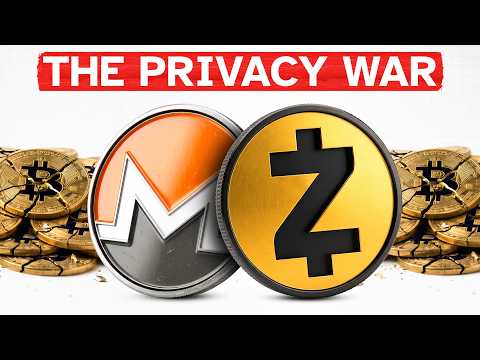
- Monero and Zcash were built as private alternatives but got delisted by major exchanges like Binance, Kraken, and OKX.
- The US government sanctioned Tornado Cash (2022) – the first time software, not a person, was sanctioned.
- Developers like Alexey Pertsev (Tornado Cash) and the Samourai Wallet founders faced criminal prosecution; Roman Storm was convicted, but the more serious charges remain open.
- Courts ruled that immutable smart contracts cannot be owned and thus cannot be sanctioned – but prosecutions of developers continued.
- Zero-knowledge proofs allow verifying information without revealing it – key for scaling and privacy.
- Ethereum and Vitalik Buterin are making privacy a core pillar (e.g., the Kohaku framework).
- Institutions also want privacy: Banks like JPMorgan use private chains such as Canton to avoid exposing trading strategies.
- The concept of selective disclosure emerges: reveal only what is necessary – e.g., via Privacy Pools or Zcash viewing keys.
The conflict is about who gets privacy: Institutions want protection from competitors but compliance with regulators; Cypherpunks want total privacy. The central question: Should financial privacy be the default on-chain, or something you have to opt into?


