Nofinity Logo
Onboarding

Welcome to Nofinity

Your premium hub to transform hours of YouTube video into concise, 5-minute text summaries. Build your custom expert feed!

1. Skip the Video

Save hours of watching. Read compact, AI-powered key takeaways in a premium magazine layout – completely ad-free.

2. Custom Feed

Subscribe to top experts in the Explore area to curate your personal, dynamically updating video feed.

3. Suggest Channels

Propose new YouTube channels. Once approved, our system automatically ingests and summarizes new uploads.

Latest Analyses(7)

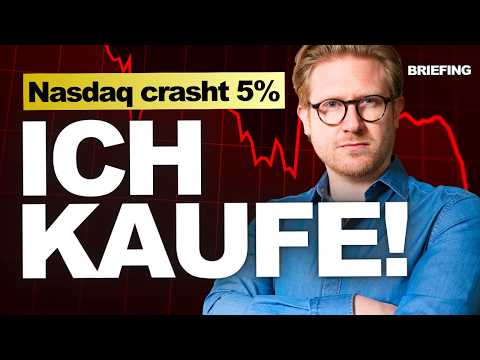
Nasdaq Deep Red: What Now?! THIS We Buy Now! // BRIEFING
Mario Lochner|06. Juni

Nasdaq Deep Red: What Now?! THIS We Buy Now! // BRIEFING

📊 Market Overview: A Summer Storm at the Stock Exchange? The AI rally is faltering while surprising economic data and the upcoming SpaceX IPO are moving the markets.

đŸ‡ȘđŸ‡ș Market & Sentiment:

  • Topic of the Week: The AI rally has stumbled. Stocks like Super Micro Computer (SMCI) and Broadcom (AVGO) have dropped sharply. Many stocks trade far above their 200-day moving average (e.g., Super Micro Computer +242%), indicating heightened risk.
  • Winners & Losers: Marvell Technology (MRVL) surged +30% in a single day after a positive comment from Chensang (potential $1 trillion valuation). SAP and Palo Alto Networks are winners. Lululemon (LULU) (-41% YTD) and Strategy (MSTR) (first Bitcoin sale since 2022) are the big losers.
  • Bears vs. Bulls: Bears warn of a bubble (comparing to Dotcom and the Shiller P/E). Bulls counter that earnings at large AI firms are real and exceptional (S&P 500 profit margins at record highs). Warren Buffett is buying into Alphabet via Berkshire Hathaway – a clear vote of confidence.
  • Surprising Data:
    1. Trueflation is at 1.9% – inflation fears are exaggerated.
    2. The Economic Surprise Index is at a multi-year high – the US economy is performing better than expected.
    3. Financial conditions are as loose as before the Iran war – a key driver for the rally.

🚀 Highlight: SpaceX IPO

  • Valuation: $1.8 trillion (not billions!). This IPO is historically massive (larger than all IPOs of the last decade).
  • Subscription: Trade Republic and Revolut offer access.
  • Risks: Maximum drawdown at comparable IPOs median 54%. Elon Musk has a 366-day lockup period (no sale in the first year).
  • Idea: Free report on SpaceX & six stocks benefiting from the boom (link in description).

🔍 Summary & Strategy:

  • AI Momentum: Not over yet. AI adoption (only 50% of US firms pay for models) and token spending (per LM Token Expenditure Index) are still rising.
  • Strategy: Don't get greedy. Buy in tranches (e.g., Broadcom after the pullback). Keep a 15% cash position for potential summer storm pullbacks.
  • Bitcoin: Analyst Marian Kopotsch is buying in tranches: 1st at $61k, 2nd at $55-60k, 3rd at $48-50k.
  • Live Webinar: On June 9th with Dr. Gert Kommer (free).
Why Washington Won't Sign the Clarity Act
Coin Bureau|05. Aug.

Why Washington Won't Sign the Clarity Act

Why Washington Won't Sign the Clarity Act

This video breaks down the real reasons behind the stalled Clarity Act for crypto regulation, focusing on a single unanswered document that has been sitting in the White House since July 30.

  • The Core Conflict: A compromise proposal by Senators Tillis and GĂĄlvez would ban federal officials (and their spouses) from issuing or sponsoring digital assets while in office, enforced by the Attorney General. The White House has not responded.
  • The Stalemate: The bill needs 60 Senate votes but is blocked by exactly seven Democrats who demand stricter ethics rules – the very rules the President won't sign.
  • The Conflict of Interest: A Senate Banking Committee minority report reveals the Trump family earned over $1.4 billion in crypto income in 2025 – about 23% of the President's reported income. The ethics clause would directly affect this revenue.
  • Who's Not Blocking: Wall Street (BlackRock, Fidelity, Goldman Sachs) and community banks publicly support the bill, seeking only minor tweaks. Blaming Elizabeth Warren or the banking sector is a distraction.
  • Market Impact: Bitcoin is flat, while Coinbase and Circle have lost value. Analysts see a
I Just Bought 3 Stocks!
Value Investing with Sven Carlin, Ph.D.|05. Aug.

I Just Bought 3 Stocks!

Introduction

The investor presents three newly purchased stocks and mentions his research platform with a 21-day money-back guarantee.

First Purchase: Value Holding
  • Buys a holding company below its intrinsic value (sum-of-the-parts).
  • Expects a return of 100% (from 10 to 20) through catalysts like liquidation or spin-offs.
  • 40% of market cap in cash – the rest is practically free.
Second Purchase: Defensive Niche Company
  • 8% earnings growth over 10 years, P/E ratio of 10, dividend yield 6%.
  • Potential total return of 14% per year.
  • Likely takeover by private equity as an additional catalyst.
Third Purchase: Quality Company with High Return
  • Return on equity 20%, price-to-book ratio 1.2 – implies expected return in the high teens.
  • Market cap below 2 billion, away from the AI hype.
  • Focus on less noticed small caps.
Strategy and Platform
  • Risk minimization is the priority (Warren Buffett's rule: avoid losses).
  • Model portfolio with 15% return per year over 8 years.
  • New book coming in September; platform price will increase, current price stays.
Stocks Hit New Highs
Benjamin Cowen|04. Aug.

Stocks Hit New Highs

📈 S&P 500 at New All-Time Highs – What’s Next?

This video analyzes the current state of the S&P 500, which hit new all-time highs in August 2026. The speaker compares the situation to previous midterm election years (2014, 2018, 2022) and identifies patterns suggesting a possible correction in late summer or autumn.

🔍 Historical Comparisons

  • 2014: Correction started on September 19 with a decline of about 10%.
  • 2018: Correction started on September 21 with a decline of about 20%.
  • 2022: Correction started as early as August 16 (bear market) with a decline of about 20%.
  • Current (2026): The S&P 500 is at all-time highs – similar to 2014 and 2018 at this time.

⏳ Potential Timing of the Correction

  • The next Fed meeting on September 16 could be a turning point.
  • A rate hike or persistently high bond yields (10-year at 4.6%, 30-year already above October 2023 levels) could trigger a correction.
  • The speaker expects the correction to begin in September, but it could extend into October or December.

💡 Impact on Bitcoin

  • Historically, Bitcoin's cycle bottom often coincided with the second stock market correction in the second half of the year (e.g., 2014, 2018, 2022).
  • If the S&P 500 drops to 6,000, Bitcoin could lose support at $60,000.

đŸ› ïž Speaker's Strategy

  • He regularly buys low-cost index funds and does not try to time the market.
  • He views corrections as buying opportunities, not sell signals.
  • He advises monitoring the bond market and the Dollar Index (DXY).

📅 Conclusion

  • New all-time highs often lead to further highs before a correction occurs.
  • The most likely period for a correction is September 2026, based on historical patterns.
  • The speaker remains optimistic for long-term investors but warns of short-term risks.
Follow the Money, follow the Flow, follow the Signals Flashing đŸ”„đŸ“ˆ
InvestAnswers|04. Aug.

Follow the Money, follow the Flow, follow the Signals Flashing đŸ”„đŸ“ˆ

📊 Market Sentiment & Macro
  • Oracle CDS hits higher levels than the Global Financial Crisis – a warning for credit markets.
  • The US steps in to support the Japanese Yen, highlighting fiat fragility.
  • Crypto Fear & Greed drops to 25 (extreme fear), Ethereum bleeds, Bitcoin holds $64K despite geopolitical tensions.
🟠 Bitcoin: Bottom Formation?
  • Three on-chain indicators (Satoshi Meter, Porcopolis Power Law, Omega Score) align to signal a deep accumulation zone („killbox“).
  • The historical correlation with ISM PMI remains intact: PMI has exploded, and Bitcoin should follow within 60 days – otherwise the correlation is dead.
  • US GDP forecast for Q3 2026: +6.2% (Atlanta Fed), driven by AI.
📈 Stocks: Strong Rebound After July Crash
  • Tech stocks recover massively: Microsoft +26%, Amazon +19%, Palantir +30% (the $106 dip highlighted as an ideal entry).
  • AI capex from hyperscalers exceeds $1 trillion, flowing into Nvidia, AMD, Broadcom, etc.
  • Tesla FSD: 70 million miles/day, life-saving; Optimus robot in development.
  • SpaceX beats expectations (revenue +92%, profit), but „buy the rumor, sell the news“.
đŸ€– AI Narrative: Open Source Wins
  • Open-source models (DeepSeek V4) outperform closed source (Claude) with better quality at 98% lower cost.
  • GPU costs continue to rise – demand is insatiable.
🌍 Outlook
  • Europe lags due to overregulation.
  • AI could become an incorruptible source of truth, reshaping politics and society.
  • Key takeaway: It's always darkest before the dawn – bullish on Bitcoin and AI.
Risk researcher warns: Why shareholders are walking blindly into ruin + Germany's state failure
Mario Lochner|04. Aug.

Risk researcher warns: Why shareholders are walking blindly into ruin + Germany's state failure

Summary: Risk Researcher Warns: Why Shareholders Are Walking Blindly into Ruin + Germany's State Failure

In this interview, risk researcher Prof. Dr. Werner Gleisner analyzes the current risks for investors and companies. He warns of a dangerous risk blindness among many investors who focus only on cheap valuation metrics (like P/E ratio) without considering actual corporate risks. For Germany, he paints a bleak picture: competitiveness is declining, bureaucracy is paralyzing, and the state is failing to implement necessary reforms.

Germany's Weakness and Systemic Risks
  • The risk situation for German companies has worsened due to geopolitical power shifts and self-inflicted problems (e.g., low productivity, high energy costs).
  • Germany is in a weak position because it has set wrong priorities for years (e.g., ESG goals over economic growth).
  • The biggest crisis could be a chance for reforms, but political gridlock (firewalls, lack of majorities) prevents quick solutions.
Risk Management – The Big Gap
  • Many companies fail to meet legal requirements (StaRUG 2021): They must identify, quantify, and aggregate risks (Monte Carlo simulation).
  • Without risk aggregation, companies miss combination effects – this is a ticking time bomb for bankruptcies.
  • Auditors often do not check this; therefore, shareholders are blind to internal risks.
Value Investing 4.0 – With a Quality Filter
  • Classic value investing (low P/E) is risk-blind: It confuses undervalued companies with high-risk cases.
  • Modern strategy: first estimate the probability of bankruptcy (e.g., using equity ratio and return on total capital), then only select robust companies with a cheap valuation.
  • Studies show: Profitability (high return on equity) is a stable success factor.
AI as Opportunity and Threat
  • AI can process huge amounts of data but is often used incorrectly for business questions (e.g., expected value vs. most likely value).
  • Properly curated, AI helps with risk analysis and decision templates.
  • Danger: AI amplifies human errors and does not replace decision-makers' responsibility.
Conclusion and Outlook
  • Within the next 10 years, 1–2 severe crises are likely (economic, financial, or geopolitical crisis).
  • Investors should diversify globally, favor robust companies, and check for risk aggregation in annual reports.
  • Germany needs three immediate measures: faster defense capability, restoration of competitiveness (reduce bureaucracy, foster innovation), and a comprehensive national risk analysis.

Original title: Risikoforscher warnt: Darum laufen AktionÀre blind ins Verderben + Deutschlands Staatsversagen