Coin Bureau
2 min read
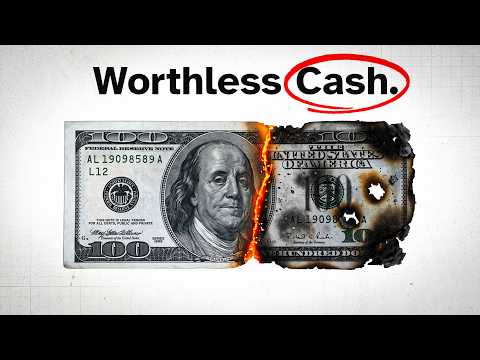
Cash Will NEVER Be Safe Again
The Invisible Tax on Cash
The US government now pays over $1 trillion annually in interest on its debt (about $2.9 billion per day). Historically, every government that ran out of money used the same trick: they debased the currency. Roman emperors diluted silver coins, English kings plated copper with silver, and today central banks simply print money. The result is financial repression – a hidden tax on cash holders.
Historical Examples- Ancient Rome: The denarius' silver content dropped from 98% (Augustus) to 2–5% (Aurelian). Diocletian's price controls failed.
- England (16th century): Henry VIII reduced silver content from 92.5% to 25% – the copper nose ("Old Copper Nose") became a symbol of debasement.
- Bretton Woods (1971): Nixon ended dollar-gold convertibility. Since then, the dollar lost 87% of its purchasing power.
- US national debt exceeds $40 trillion (2024).
- Interest payments skyrocket; every crisis is met with more money printing (QE, COVID stimulus).
- Cash steadily loses value – savers finance the bailouts.
- Real estate: Tangible but illiquid, high transaction costs, jurisdiction-bound.
- Gold: Proven for 5,000 years, but confiscated in the past (USA 1933).
- Bitcoin: Capped at 21 million coins, decentralized, portable, divisible. No gold window to close. Downsides: volatility, key loss risk, theoretical limit change.
Cash will never be safe again because governments always have an incentive to debase. Bitcoin offers for the first time a form of money where the holder – not the issuer – has the final say.