Nofinity Logo
Onboarding

Welcome to Nofinity

Your premium hub to transform hours of YouTube video into concise, 5-minute text summaries. Build your custom expert feed!

1. Skip the Video

Save hours of watching. Read compact, AI-powered key takeaways in a premium magazine layout – completely ad-free.

2. Custom Feed

Subscribe to top experts in the Explore area to curate your personal, dynamically updating video feed.

3. Suggest Channels

Propose new YouTube channels. Once approved, our system automatically ingests and summarizes new uploads.

Latest Analyses(6)

Investors don't realize what will soon plummet – here's how I'm acting now // BRIEFING
Mario Lochner|03. Okt.

Investors don't realize what will soon plummet – here's how I'm acting now // BRIEFING

📉 Something Will Plummet Soon

According to JP Morgan, oil flows from crisis regions have already recovered to 98% of pre-war levels. The oil crisis might resolve faster than expected – the oil price is at risk of falling.

📊 Bond Madness & Bear Concerns
  • 10-year US yields at levels not seen since 2002 (above 5.2%).
  • Bears warn: High yields + rising credit spreads = risk for financial markets and weak links (France, Italy).
  • US consumer confidence at its lowest since 2014, but spending remains solid.
  • Market breadth is shrinking – many stocks below their 200-day moving average.
🐂 Bulls Counter with AI, Inflation & Seasonality
  • US inflation data better than expected (PCE at 3.4%, Core at 3.0%).
  • Rate hike probability for October now only 21.6% (FedWatch).
  • AI boom continues: Trump pledges no regulation, OpenAI and Google report strong numbers.
  • Seasonality favors rising markets (October–December historically strong).
  • Labor market cools (29K jobs vs. 90K expected) – Goldilocks scenario.
🤯 Mindblow: What Many Miss
  • Oil price: Shorts on Treasuries are extreme – potential short squeeze could boost stocks.
  • AI investments need only 60% of existing order backlog to achieve 15% returns.
  • Rates may already be too high – data centers boom, private construction collapses.
  • Billman's thesis: Higher rates fuel inflation (vicious cycle via AI investments).
  • S&P 500 valuations are normal (+10% vs. +16% during Dotcom bubble).
💡 Money Ideas & Portfolio Changes
  • Bought: Credo Technology (AI infrastructure) and Burlington Stores.
  • Goldman Sachs Conviction Buy List: includes Microsoft, Amazon, UnitedHealth, Vertex, Delta, Applied Materials.
  • Bitcoin: Volatility decreased – bear market seems over.
  • Defense stocks: Russia increases military budget by 27% – potential opportunity.
  • Risk: Companies with high variable debt (financials, consumer cyclical, industrials).
Payrolls Come in Weak, Unemployment Ticks Higher
Benjamin Cowen|02. Okt.

Payrolls Come in Weak, Unemployment Ticks Higher

Labor Market Report Overview
  • The unemployment rate ticked up slightly from 4.1% (rounded) to 4.2% – in absolute terms from 4.14% to 4.18%. Not yet a clear trend.
  • Layoffs actually fell; the higher unemployment rate is partly due to a rising participation rate, as more people are looking for work.
  • By age group: 16–19 year olds rose from 12.1% to 14.5%; 20–24 year olds recently stood at 8%; 25–54 year olds were broadly unchanged. Younger job seekers are having a harder time.
  • Job growth is modest: the three-month average is around 152,000, and prior figures were revised lower. There is little cushion against further weakness.
Yields, Inflation, and Credit Markets
  • Despite weak payroll data, long-end yields (10/20/30-year) rose – unusual. The driver appears to be inflation concerns, including a hot Tokyo CPI print.
  • Credit spreads (including high yield) have widened. Historically, that has often preceded equity drawdowns – but so far the S&P 500 has been supported by the “Magnificent 7.”
  • The equal-weight S&P 500 and the Russell 2000 are already correcting, while the major indexes remain near highs.
Cycle Signals, QT, and Outlook
  • Quit rates are a cyclical indicator: they tend to fall in recessions because workers are less willing to leave their jobs.
  • Many leading indicators only trigger after falling asset prices and often identify recessions in hindsight.
  • A key topic may be a resumption of quantitative tightening (QT) if inflation persists – with implications for crypto and risk assets. So far, there has been no sustained rotation from Bitcoin to altcoins.
  • Key message: Markets ignore macro factors until they become the only thing that matters. The upcoming inflation report in a few weeks is therefore crucial.
  • Recommendation: Have an investment strategy and do not overreact to short-term macro noise.
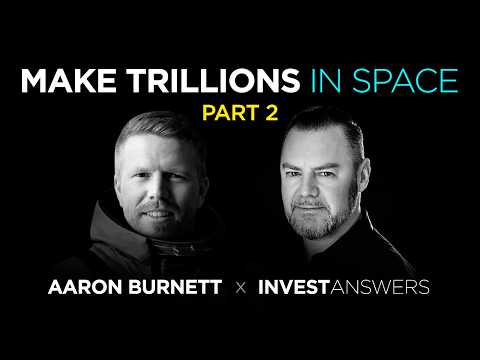
While You Slept, SpaceX Did THIS 🚀 & Latest Price Targets
InvestAnswers|02. Okt.

While You Slept, SpaceX Did THIS 🚀 & Latest Price Targets

Weekly Highlights
  • First revenue-generating flight of a new rocket – a strong start to the week.
  • AI hardware in orbit: After Nvidia's H100, Google TPUs are now in space for the first time – a step toward orbital data centers beyond SpaceX.
Starship & Technical Hurdles
  • The test flight returned earlier than planned due to concerns about tank heating.
  • The issue appears to be more about tank pressurization/propellant feed than the engine itself ("Raptor").
  • Such "two steps forward, one step back" patterns are normal given the iteration speed; delays are often days-to-weeks, not months.
Price Targets & Valuation
  • The discussed price targets are in line with the speakers' own models; 2030 numbers land in the middle of the range.
  • A valuation around $2 trillion (around $150 per share) feels more comfortable below 150 than at highs.
  • Even if Elon Musk's optimistic launch cadence (50–100 per year) isn't met, 30 launches still leaves plenty of upside.
Starlink & Defense
  • Starlink is already cash-flow break-even; a satellite costs an estimated $1–2M to build.
  • About 20% of SpaceX revenue comes from US government/military business – space and defense are tightly linked, but SpaceX isn't alone there.
Competition & Risks
  • China and the US are driving demand; space is becoming increasingly strategic.
  • Risks: nationalization, "wrong people with too much power," and dependence on a few players.
  • Demand for AI compute could boost value significantly – but many forecasts remain uncertain.
New Audi A6 Allroad vs New Audi Q7! | 4K
Top Gear|02. Okt.

New Audi A6 Allroad vs New Audi Q7! | 4K

A thorough comparison of the new Audi A6 Allroad (raised station wagon) and the Audi Q7 (large SUV). Both share the same 3.0‑L V6 TDI (295 hp/217 kW), mild‑hybrid technology, and quattro drive.

Comparison Dimensions

  • Price: Allroad from approx. £70,000, Q7 from £82,000; similarly equipped, the Allroad is £8,000–10,000 cheaper.
  • Seats: 5 (A6) vs. 7 (Q7).
  • Cargo space: 466 L (1,500 L with seats down) for the Allroad, 722 L (1,980 L) for the Q7.
  • Towing capacity: 2,500 kg (A6) vs. 3,500 kg (Q7).

Exterior Design

A6 Allroad (5th Gen)
  • Based on the A6 Avant, but 110 mm wider – looks bulky, reminiscent of an RS6.
  • Increased ground clearance (+34 mm standard, +55 mm air suspension) and wider track (74 mm) for the standard 21‑inch wheels (approx. 53 cm).
  • Specially shaped wheel arches and side skirts; OLED lights offer eight headlight designs, lane‑keeping/orientation light and warning symbols for close‑following traffic.
Q7 (3rd Gen)
  • Angular, more aggressive with a higher hood line and a prominent grille.
  • Tested with optional 23‑inch wheels (approx. 58 cm); series often 22 inches.
  • OLED lights with a continuous light bar and a new turn signal that projects symbols for pedestrians/cyclists onto the road.

Interior

A6 Allroad
  • Solid A6 look with large driver display, 14.5‑inch touchscreen (slightly curved) and 12.3‑inch passenger display.
  • Heated electric front seats and softly closing doors as standard.
  • Option: photochromic panoramic sliding roof (adjustable).
  • Easy to operate (clear physical stalks for turn signals, wipers, etc.).
  • No Allroad branding – a letdown.
Q7
  • Similar screen setup (11.9‑inch driver display + 14.5‑inch touchscreen + 12.3‑inch passenger display).
  • Gear selection via buttons; steering wheel has many controls.
  • Electric air vents (not manually adjustable) criticised.
  • Options: MagSafe wireless chargers (phone stays centred), surface heating, B&O sound system with head‑rest speakers and vibrating seat cushions (epic).
  • More minimalist with nice materials such as soft‑touch and pseudo‑carbon fibre.

On‑Road Performance

A6 Allroad
  • Adaptive air suspension (modes: Dynamic, Balanced, Comfort).
  • Precise but slightly numb steering; overall light, agile (weight approx. 2.2 t).
  • Quattro Ultra disengages the rear axle on the motorway, saving fuel.
  • Feels more composed and dynamic than the Q7.
  • Driving enjoyment praised.
Q7
  • Same engine, but 37 lb‑ft (≈50 Nm) more torque and an electric turbo for better response.
  • Light steering, smooth transmission.
  • Heavier (approx. 2.5 t) and less agile than the Allroad.
  • Better than expected, but large wheels hurt on poor roads.

Off‑Road Capability

A6 Allroad
  • Off‑Road/Off‑Road Plus mode raises the suspension and locks the differentials.
  • Limited ramp angle (long wheelbase, moderate ground clearance).
  • Good for dirt roads, dry fields and light bumps – caution with deep ruts.
  • Passes small tests (hill, logs, side slope) but bottoms out on sharp crests.
Q7
  • Easier off‑road thanks to higher ride (less scraping).
  • 23‑inch wheels are suboptimal for off‑road (tyre profile).
  • Covers the same terrain without touching, but the ride quality on rough trails is bumpier.

Verdict

  • The A6 Allroad delivers the better driving experience on tarmac (lighter, more agile, dynamic) and covers 90 % of the Q7’s abilities with more style.
  • The Q7 impresses with more space, higher towing capacity and superior off‑road ease, but is more expensive, heavier and less nimble.

Recommendation: If you don’t need seven seats or maximum off‑road performance, choose the A6 Allroad – it’s faster, more efficient, more fun and easier to handle. The Q7 is the vehicle for large families and heavy work.

Which one would you pick? Comment below!

Life Advice That Sounds Good But Will Destroy You
theMITmonk|02. Okt.

Life Advice That Sounds Good But Will Destroy You

The speaker takes a brutally honest look at six pieces of commonly given advice that can sneakily steer your life in the wrong direction. Drawing from his extraordinary journey (from a homeless teen in Mumbai to a monk, MIT, Wall Street, a musician, and a Tech CEO), he reveals the hidden traps and the 'missing half' of every popular saying.

1. "Never Give Up." – The Courage to Quit
  • The Insight: Perseverance and stubbornness feel exactly the same from the inside. One serves your deepest goal, the other ignores reality.
  • The Tool: Use the Three-Cost Model (Future, Sunk, and Opportunity Costs) to decide when to walk away.
  • The Story: Slack was born from shutting down the game Glitch. Letting go of the original dream created a $28 billion company.
2. "Look Out for Number One." – The Zero-Sum Trap
  • The Shift: Life is rarely a zero-sum game. Your win does not require someone else's loss.
  • The Case: Matt Damon and Ben Affleck shared a bank account for years before their Hollywood breakthrough. Success was a team sport.
  • The Leadership Lesson: The best way to care for yourself is to genuinely invest in others right now, not as a future transaction. Be present.
3. "Follow Your Passion." – Putting the Cart Before the Horse
  • The Reality: Passion is usually the byproduct of mastery and curiosity, not the starting point.
  • 3 Questions to Ask Yourself:
    • Have you done it long enough to know if you can be good at it?
    • Can the market actually support this as a business? (Not all passions are lottery tickets.)
    • Will you still love it when it becomes a source of financial stress?
  • The Example: Julia Child found her legendary passion for cooking almost accidentally later in life.
4. "Money Can't Buy Happiness." – The Missing Half
  • The Nuance: Money buys the absence of specific miseries like debt, entrapment, and powerlessness. It buys options and freedom.
  • The Crucial Question: What specific problem is this money supposed to solve? For security and time, it’s excellent. For love and meaning, it’s useless.
  • The Personal Story: The loan for a one-way plane ticket from Bombay to Boston completely altered the speaker's life trajectory.
5. "Find Your Soulmate." – The Romantic Fantasy
  • The Hard Truth: Every soulmate must eventually become a roommate. No one is perfect or can read your mind.
  • The Better Advice: Don't search for a checklist. Choose someone who challenges you to grow and evolves alongside you. A relationship is built, not merely found.
6. "You Are Who You Are." – The Shackles of Identity
  • The Biology: You replace about 4 million cells every second. You are literally not the same person you were a moment ago.
  • The AI Imperative: In the age of AI, constant internal 'software updates' are mandatory for survival and relevance.
  • The Raft Parable: The identity that carried you over the first river becomes the 500-pound burden on your back for the next. You are not finished yet. Learn to let go of who you used to be.
S&P 500 Intrinsic Value
Value Investing with Sven Carlin, Ph.D.|02. Okt.

S&P 500 Intrinsic Value

Introduction
  • The S&P 500 is used as a general investment benchmark. From a value investing perspective, the question is whether the index is fairly valued today.
Key Inputs
  • Earnings per index point: 296
  • P/E ratio: historically elevated, currently in the upper range (99th percentile)
  • Long-term earnings growth: 6–7% p.a.
  • Discount rate (expected return): 10%
  • Payout ratio: approx. 30% (dividend yield near historical low)
Scenarios
  • Base case (7% growth, terminal P/E 17): Intrinsic value 4,341 – well below the current level of about 7,000 points. Expected return only 3–4%.
  • Bull case (9% growth thanks to AI, terminal P/E 25): The current price already reflects these high expectations – no margin of safety.
  • Bear case (5% growth, terminal P/E 15): Intrinsic value 3,300 – roughly 60% below the current price.
Conclusion
  • No margin of safety.
  • A large part of recent gains depends on AI stocks – potential bubble.
  • From a value investing standpoint, the S&P 500 is therefore risky and currently too expensive.
  • A purchase would only be attractive after a significant market decline.