Nofinity Logo

Latest Analyses(6)

Is Bitcoin DEAD?
2 min read

Is Bitcoin DEAD?

📉 Bitcoin Crash and Capitulation
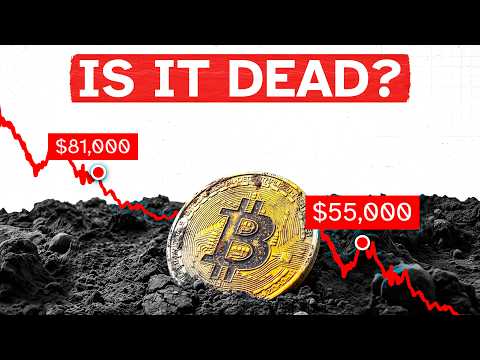
  • Bitcoin dropped to $55,000 over the weekend – its lowest since September 2024. Triggered by a liquidation cascade: over $2.7 billion in leveraged positions were forcibly closed within 24 hours (the 11th largest such event).
  • The crash began with a Nasdaq decline and hit concentrated long leverage near $60,000. When that level broke, sell-offs triggered further liquidations.
🔍 Who Sold and Why?
  • Short-term holders (cost basis ~$74,100) realized losses of over $11 billion in the crash week – about eight times more than profits. This is considered capitulation.
  • Macro pressure: Markets expect a Fed rate hike in December, with 10-year Treasury yields near 5%. This weighs on risk assets like Bitcoin.
  • Who bought? The Saturday recovery was driven mainly by short liquidations (longs were barely active). Wall Street ETFs saw $3.5 billion in outflows in November, stablecoin reserves shrank by $16 billion.
📊 Is the Bottom In?
  • The realized price (average cost of all coins) is $53,700. Bitcoin stopped just above it – a historically important support line.
  • Glassnode cites two signals for a true bottom:
    1. A renewed increase in stablecoin supply (fresh capital).
    2. A reclaim of $74,100 (the entry price of recent buyers).
  • Conclusion: Bitcoin is not dead, but a sustainable recovery requires new buyers. As long as capital flows out, the market remains vulnerable.

Author's view: The forced selling is over, but real buyers have yet to return.

Aging Is a Software Failure, Not Cellular Damage
3 min read

Aging Is a Software Failure, Not Cellular Damage

Summary: Aging as a Software Failure – The Bioelectric Revolution

This video presents Dr. Michael Levin's (Tufts University) groundbreaking hypothesis: Aging is not primarily hardware damage (DNA mutations, cell wear) but a breakdown of the bioelectric software that coordinates our anatomy.

💡 Core Idea: Anatomical Software vs. Hardware
  • Our genome is the physical hardware.
  • Bioelectric networks (slow, steady DC voltage gradients across cell membranes) act as the software, instructing cells where they are and what structures to build/maintain.
  • When this communication fails, cells “forget” their role – leading to aging and poor regeneration.
🧪 The Landmark Frog Study (Science Advances, 2022)
  • Researchers tested this on adult African clawed frogs (Xenopus laevis), which normally cannot regenerate limbs.
  • Method: A wearable Biodome (silk protein shell) was sewn over the amputation stump for just 24 hours. The shell contained a cocktail of five compounds:
    • BDNF (nerve survival & axon growth)
    • 1,4-DPCA (limits scarring, promotes blood vessels)
    • Growth hormone (cell proliferation)
    • Resolvin D5 (inflammation resolution)
    • Retinoic acid (limb patterning)
  • Result: After a single day of treatment, limbs grew autonomously for 18 months:
    • 76 % of treated frogs developed complex, paddle-like structures with bone, blood vessels, and nerves.
    • The regrown limbs were sensitive to touch and used for swimming.
  • Key takeaway: Cells already possess the genetic program – they only need a short trigger to restart it.
⚡ Bioelectricity: The Language of Tissues
  • Cells communicate via gap junctions (tiny protein tunnels) and ion pumps.
  • This creates electric maps that precede physical anatomy (e.g., the “electric face” in frog embryos).
  • By manipulating these voltage patterns, researchers could grow eyes on the gut of embryos.
  • Morphostasis = active maintenance of anatomical form through constant electric exchange.
🧬 Aging as Communication Collapse
  • Over time, ion channels and gap junctions degrade (due to oxidative stress, inflammation).
  • Cells become electrically isolated – their “coordinate map” fades.
  • Consequence: Tumor-like growths (as seen in decoupled frog cells) or general tissue aging.
  • Hypothesis: Restoring youthful electric coupling could slow or even reverse aging.
🔬 Outlook and Realism
  • Morphoceuticals Inc. (co-founded by Levin and Kaplan) is working on preclinical rodent models for kidney, liver, and fibrosis repair.
  • Advantage: 20 % of existing drugs already target ion channels – possible repurposing.
  • No human clinical trials yet. Translating from amphibians to mammals remains a major hurdle.
  • Nevertheless, the research shows: Cellular hardware alone isn't enough – bioelectric “software” is key to regeneration and longevity.

👉 What do you think of this software perspective on aging? Share your thoughts in the comments!

Access the Power of Now to Experience Life More Fully | Eckhart Tolle
3 min read

Access the Power of Now to Experience Life More Fully | Eckhart Tolle

Introduction

In this episode of the Huberman Lab Podcast, Andrew Huberman speaks with Eckhart Tolle, one of the most renowned teachers of consciousness. The aim is to provide practical tools to experience the present moment more fully and live a richer life.

Core Concepts: Being vs. Thinking
  • Being present means consciously taking in sensory perceptions without immediately labeling or judging them.
  • Most people identify with their constant stream of thoughts (the 'ego') and thus miss the depth of the present moment.
  • Two ways of knowing:
    1. Conceptual knowledge (names, labels, judgments)
    2. Non-conceptual knowledge (direct, experiential awareness)
  • The key is to find inner stillness – a space beyond thought where pure awareness resides.
Daily Practices
  • Conscious sensory perception: Look around, listen to sounds – reduce thinking.
  • Listening to silence: In a quiet environment, perceive outer silence; it naturally leads to inner stillness.
  • Mindful routine actions: E.g., washing hands – feel the water temperature, the scent of soap.
  • Acceptance of the Now: Don't resist the present moment; accept it – this opens access to a deeper power.
Challenges as Growth Opportunities
  • The world is not here to make you happy; it challenges you to become more conscious.
  • Problems, failures, and other people are your 'curriculum' – they help you see through the ego and strengthen your Being.
  • Non-judgment: Even with difficult people, you can sense the pure Being behind their personality.
The Triangle Metaphor
  • Imagine a triangle: The base consists of life's opposites (good/bad, success/failure).
  • The apex is awareness. From there you can engage with the world without getting lost in it.
  • The goal is to keep returning to the apex – a place of inner power independent of external circumstances.
Avoiding Ego Traps
  • Success can inflate the ego and block access to the deeper power.
  • Authenticity is crucial: Those who don't assign themselves a special role remain open channels for energy to flow through.
  • Playfulness: Meditation and mindfulness don't have to be heavy or serious – they can also be joyful.
Final Thought
  • You are already complete on the level of Being. It's not about achieving something, but about consciously experiencing what has always been there.
  • Use the Now – it's the only moment that truly exists. Live from the apex of the triangle, and life will flow with greater ease.
The Crypto Market Could Stay Flat While These Coins Win
5 min read

The Crypto Market Could Stay Flat While These Coins Win

Summary: The Crypto Market Could Stay Flat While These Coins Win

This episode of Bankless features a deep dive with the 'Tulip King' on the current state of crypto in 2026. The core thesis is that the market has matured, splitting into a few clear winners, while the rest languishes.

I. The Great Narrative Shift (2021 vs. 2026)

  • From Revolution to Reality: The grand narratives of 2021 (DeFi replacing banks) have failed. Most tokens turned out to be 'memecoins with extra steps'.
  • The Result: Traders moved straight to memecoins, leaving a 'memecoin slop hell'. The old stories are dead, but the underlying ideas (privacy, decentralization) are waiting for the right assets.

II. The New Market Logic: 'Money vs. Earning'

The market has bifurcated into two clear buckets:

  • Bucket 1: Money: Assets that function as currency or store of value. Examples: Bitcoin, Zcash. They are protest technology against the state.
  • Bucket 2: Earning: Assets that represent a real, profitable business that returns value to holders. Examples: Hyperliquid, Venice, Derive.
  • The Consequence: Only 4-5 coins per bucket are investable. The rest is dead weight. The total market cap may stay flat, but these few winners can 10x-100x.

III. The Dotcom Parallel

  • Historical Precedent: Crypto is mirroring the Dotcom crash (2000). While the broad market (e.g., Nasdaq) took 16 years to recover, quality companies (Amazon, Apple) hit new highs years earlier.
  • The Future: Crypto has many 'Pets.coms' that need to die. After that, assets like Hyperliquid, Zcash will lead a 25-year bull run.

IV. How to Find the 'Obvious Good Coins'?

Tulip King offers a pragmatic checklist:

  1. Go to DeFi Llama and sort by Revenue.
  2. Ask yourself: 'Would I let the founder date my daughter?' (i.e., is he trustworthy and not a criminal?).
  3. Buybacks are mandatory: In crypto, without legal protections, buybacks are the only way to ensure value flows to token holders. Reinvestment is a secondary concern.

V. Ethereum and Proof-of-Stake vs. Proof-of-Work

  • Ethereum (ETH) is NOT Good Money: The argument is that Proof-of-Stake replicates the Cantillon Effect (those closest to the money printer benefit most). Proof-of-Work (like Bitcoin) is the opposite: Miners are forced to sell, promoting distribution.
  • Network Value vs. Token Value: The Ethereum network can be valuable, but the ETH token doesn't capture that value well. It's like the post office: paid by weight, not by the value of the letter.

VI. The Future: Privacy and the Rebirth of Old Ideas

  • Zcash as a Leader: The rally of privacy coins (Zcash, Pearl) shows that old ideas (Proof-of-Work, Fixed Supply) are back in vogue.
  • New Hope: Once the infrastructure is solid, old projects like ENS (onchain web addresses) or decentralized gaming can be revived. 'Everything old is new again.'

VII. Deep Dive: Eli Lilly (LLY) – The Pharma Giant as an AI Winner

  • The Bet: Tulip King is massively bullish on Eli Lilly, not just for the GLP-1 weight loss drugs (Mounjaro/Zepbound), but for the combination of blockbuster pharma and AI.
  • The Core Argument for Eli Lilly:
    • GLP-1 Market is Massive: 1 billion obese people worldwide. Demand is insatiable (every weight loss is a walking billboard).
    • AI-Pharma Advantage: Eli Lilly has the most data, the largest compute cluster (8x more than competitors), and the best patents. AI cannot fork drugs.
    • Perfect Business Model: Patients get older (via GLP-1) and then become customers for more expensive age-related drugs (cancer). This creates a 'Right Tail' outcome for a $10T valuation.
  • Return: Not a 10x stock, but with leverage (4x), a 5x becomes a 20x. This is a 'retire early' trade for the Tulip King.

VIII. Counterparty & Thread Guy

  • Strategy: Counterparty is fully focused on the streamer 'Thread Guy', whom they see as a 'generational talent'. Instead of multiple smaller shows, all efforts are on growing Thread Guy from 500k to 1M+ subscribers.
  • Philosophy: Authenticity and community. The founders trade themselves and share their wins and losses publicly.

Conclusion: The crypto market is in a consolidation phase. Easy gains are gone. Success will only come to assets that are either hard money or real earners. Tulip King sees the current bottom as a 'Dotcom bottom', presenting a generational opportunity for the next 25 years.

MEGA CRASH for Bitcoin, NVIDIA & Co. - Have we seen the worst or sell everything?
2 min read

MEGA CRASH for Bitcoin, NVIDIA & Co. - Have we seen the worst or sell everything?

Market Analysis and Perspectives After the Crash

This video analyzes the recent market downturn, focusing on Bitcoin (dropping to around $55,000) and Tech stocks like NVIDIA. The host warns that the current bounce may be deceptive and questions whether the bottom has been reached.

Current Market Situation
  • Bitcoin fell to about $55,000, breaking key support levels at $57,000 and $58,000.
  • Seven consecutive bearish weekly candles, representing a decline of approximately 30%. This is nearly unprecedented.
  • A record number of Bitcoin holders are currently in loss.
  • Spot demand is weak, and outflows of stablecoins indicate decreasing liquidity.
Speaker's Portfolio Strategy
  • All altcoins were sold to realize losses for tax purposes and to free up capital for long-term Bitcoin positions.
  • Purchased Nvidia in tranches: three out of seven tranches filled, currently at a loss.
  • Buying Bitcoin in the so-called "Value Zone" (around $55,000 and below) is part of his long-term strategy.
  • Cash position is approximately 36%, intended to be deployed if prices fall further.
Market Overview
  • The stock market is experiencing extreme volatility. The VIX (Volatility Index) reached levels around 40. Historically, such spikes have led to positive returns within one year.
  • NVIDIA suffered a massive price drop of about 49%. The AI bubble appears to have burst, but the technology itself is not disappearing.
  • Interest Rate Policy: The market prices in a 95% chance of another rate hike, but a pause is again a possible scenario (according to Wednesday's inflation data).
Outlook and Recommendations
  • Short-term: A recovery or stabilization is possible this week, but markets remain vulnerable to further setbacks.
  • Medium to long-term: The host remains confident that patiently positioned investors will benefit from a recovery once central banks adopt more accommodative liquidity policies again.
  • No solid forecast: Despite similarities to past cycles, he believes the past is not directly comparable due to a different macroeconomic environment.
Important Note

The host repeatedly emphasizes that his statements are not financial advice. His strategy is long-term oriented and involves tolerating temporary losses.

Google’s Plan to Bring Wall Street Onchain | Rich Widmann
3 min read

Google’s Plan to Bring Wall Street Onchain | Rich Widmann

In this interview, Rich Widmann, Head of Digital Assets at Google, explains the company's long-term blockchain and crypto strategy – focused on B2B infrastructure for Wall Street, not retail.

Google’s Approach: Infrastructure over Retail
  • Google started indexing Bitcoin & Ethereum data in 2018; these became the most popular public datasets.
  • Instead of consumer products (e.g., Stablecoins in Google Pay), Google prioritizes enterprise cloud infrastructure.
  • The team began as a ‘skunk works’ and later moved into Google Cloud.
Universal Ledger (GCUL) – Google’s Own Blockchain
  • GCUL is a specialized permissioned ledger for regulated financial institutions, launched in 2024.
  • It offers high throughput, low latency, and enterprise compliance features.
  • Key partnerships: CME Group for 24/7 settlement and Jack Henry to connect regional banks to tokenized deposits.
  • GCUL is semi-permissioned, designed to replicate existing trust relationships between counterparties.
MPC Custody Product
  • Multi-Party Computation (MPC) eliminates single points of failure in key management.
  • Google addresses shortcomings of existing solutions: speed, security, and pricing.
  • Built on Google Cloud KMS and using proprietary Trusted Execution Environments (TEEs) in Google data centers.
  • Google will not apply for a bank charter, but provide the technology layer to custodians.
Market Evolution: Permissionless vs. Permissioned
  • Two parallel ecosystems are emerging:
    • Permissionless: Ethereum, Solana – ideal for peer-to-peer, bearer instruments.
    • Permissioned/Semi-Permissioned: GCUL, Canton, Hyperledger Besu – for regulated finance.
  • Payments are seen as the killer use case for institutional chains.
Future Outlook: Quantum Computing & Agentic Payments
  • Google’s quantum team published a paper showing ECDSA (Bitcoin/Ethereum) might be breakable sooner than expected (end of this decade).
  • Google is already developing post-quantum cryptography and sees MPC as preparation.
  • Agentic Payments: Programmable money on blockchains could transform AI agent transactions – especially checkout, a hated step for users.
  • Stablecoins like USDC have a natural advantage, but the business model (interest vs. fees) is still evolving.
Key Takeaways
  • Google’s digital assets strategy is long-term (5–10 years) and not swayed by crypto cycles.
  • The company aims to be infrastructure provider, not a regulated custodian or exchange.
  • Unique synergies arise from combining cloud, quantum research, and blockchain technology.