Coin Bureau|03. Okt.
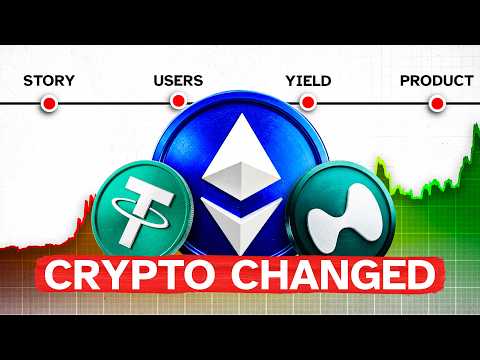
Crypto Has CHANGED (You Need To Know How)
From ICO Hype to Real Economics: How Crypto Has Fundamentally Changed
The video by The Coin Bureau explains the profound shift in the crypto industry: from speculative ICOs to protocols that generate actual revenue. The focus is on the question that now defines every token: What does this protocol actually do, and who pays for it?
The ICO Era: Stories over Substance
- 2017: A whitepaper, a logo, and a Telegram group were enough to raise millions – without a product or testnet.
- ICOs raised over $20 billion, but four out of five projects turned out to be scams or failed.
- Regulatory wave: The SEC declared DAO tokens as securities, China banned ICOs, and Telegram had to return funds.
DeFi Summer 2020: Activity Yes, But No Value Creation
- Liquidity Mining: Protocols like Compound lured users with freshly minted tokens (e.g., COMP) – essentially “renting” users.
- SushiSwap pulled over $1 billion from Uniswap by offering incentives.
- Core problem: Even the top protocols (Uniswap, Aave, Compound) didn’t pass fees to token holders – only governance rights, no revenue share.
The 2022 Collapse: Returns Without a Source
- Terra/LUNA offered 20% yields on UST – the peg collapsed, wiping out billions.
- Celsius froze withdrawals, FTX collapsed – in all cases, there was no real revenue source.
- Lesson: The question “Where does the yield come from?” became central.
Today: Protocols with Real Business Models
- Stablecoins: Tether (net profit $1.5B in Q2 2024) and Circle ($668M) invest in US treasuries and keep the interest – an extremely profitable model.
- Tokenization of RWAs: BlackRock’s BUIDL fund and Ondo list tokenized stocks and ETFs – bringing traditional financial products onto the blockchain.
- Hyperliquid as a pioneer: This perp DEX generated $429M in revenue (Jan–Sep) through fees, with up to 99% going to an Assistance Fund that buys and burns HYPE tokens. Additionally, 90% of USDC reserve yields feed buybacks.
- Fee Switches: Uniswap, Aave, Jupiter, and Sky introduce fee mechanisms that pass revenue to token holders – a paradigm shift.
Conclusion: The Best Product Wins
- Institutional investors now understand dashboards with fees, reserves, and buyback programs – this aligns with traditional finance logic (revenue, reserves, capital returns).
- Competition: In 2017, the best marketing won; in 2021, the most generous token emissions; today, the best product with real revenue wins.
- Question to viewers: Is revenue the only criterion? Or do story-driven projects still have a chance?